Acetyl L-Carnitine Review by Designs for Health - Dr. Bell
Designs for Health Acetyl L-Carnitine review by Dr. Bell. 800 mg ALCAR, a brain-friendly carnitine that supports mental energy, focus, and acetylcholine. Dosing, who benefits, thyroid and seizure cautions, and honest limits.

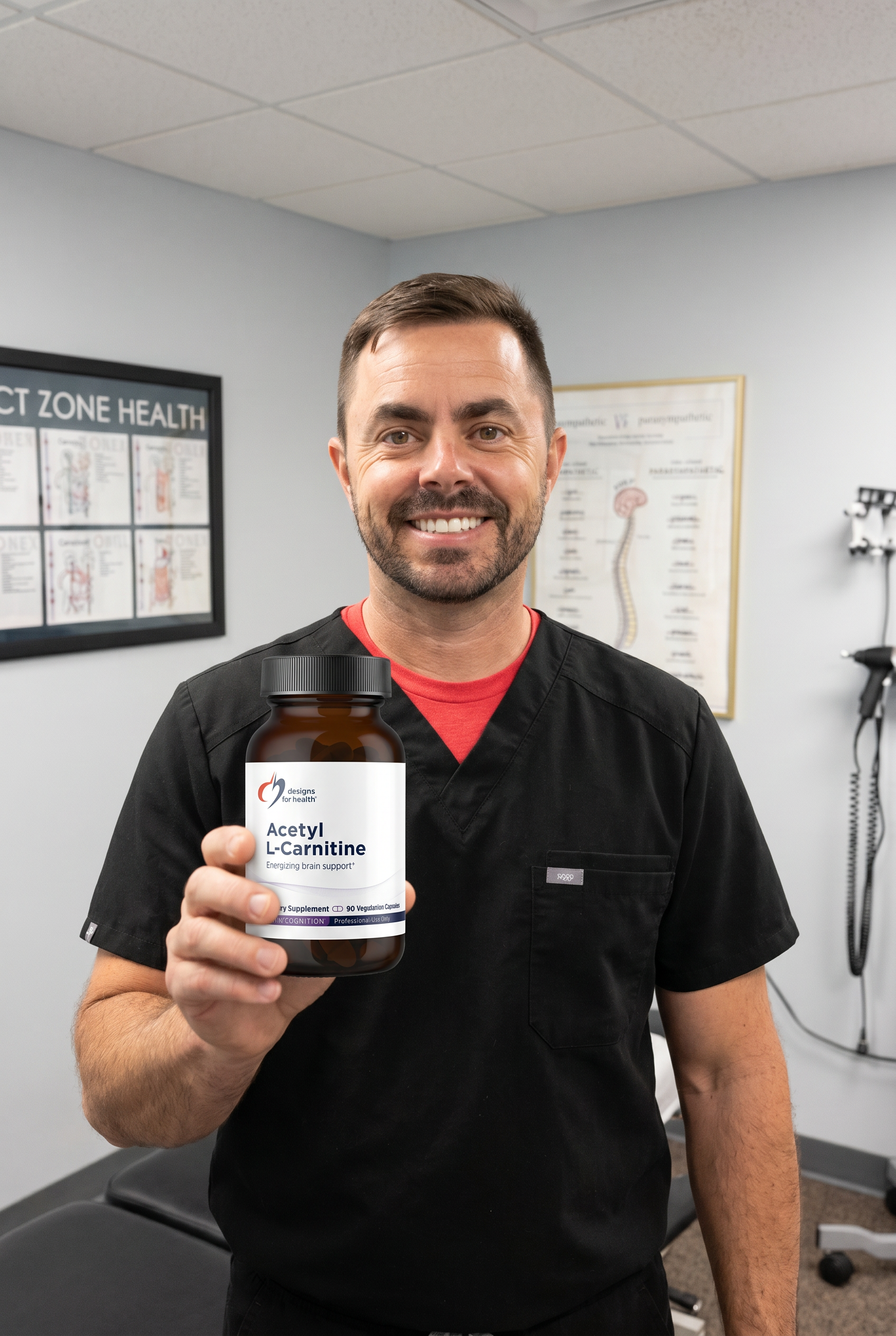
A 62-year-old patient came to me focused on staying mentally sharp as he aged. He had watched a parent decline and was motivated to be proactive about his brain. He was already exercising and eating well and wanted to know whether there was a supplement with a real mechanism for supporting mental energy and clarity, not just another pill with a hopeful label. He had read about acetyl L-carnitine in the context of brain aging and asked for my honest take.
This is a thoughtful question, and acetyl L-carnitine, often shortened to ALCAR, is one of the more interesting compounds in this space. Regular L-carnitine's main job is shuttling fatty acids into the mitochondria, the cell's energy factories, to be burned for fuel. The acetylated form, ALCAR, does that too but crosses into the brain far more readily, and it carries an acetyl group the body can use to help make acetylcholine, a key neurotransmitter for memory and focus. That brain-friendly profile is what sets it apart. I started him on Acetyl L-Carnitine.
What makes the Designs for Health version easy to recommend is that it is a clean, single-ingredient 800 mg dose of acetyl L-carnitine, with essentially nothing else. He used it consistently as part of a broader brain-and-body routine. ALCAR is supportive nutrition, not a treatment for cognitive decline or any disease, but as support for mitochondrial and brain energy it has a genuinely interesting basis. This is a straightforward way to get it.
Quick verdict: Designs for Health Acetyl L-Carnitine is the brain-friendly carnitine I reach for when the goal is mental energy and focus support: the acetylated form crosses into the brain and provides a building block for acetylcholine.
Order Acetyl L-Carnitine →What this product is actually doing
Carnitine's classic role is transport: it carries long-chain fatty acids across the membrane into the mitochondria, where they are burned to produce ATP, the cell's energy. That matters most in tissues that lean heavily on fat for fuel, like the heart and muscles. So at its core, carnitine supports the machinery of cellular energy production.
The acetylated form, acetyl L-carnitine, does two extra things that make it the brain-oriented choice. First, it crosses the blood-brain barrier much more readily than plain carnitine, so it reaches the central nervous system. Second, it donates its acetyl group as a raw material for making acetylcholine, the neurotransmitter most tied to memory, learning, and focus. The combination, mitochondrial energy support plus a building block for a key brain chemical, is why ALCAR is studied for mental energy and healthy brain aging.
Designs for Health Acetyl L-Carnitine delivers the acetylated form at a meaningful dose in a clean capsule. The product is built around that single, well-characterized compound rather than a blend, so you can use it on its own or stack it deliberately with other brain or mitochondrial support.
What is in Acetyl L-Carnitine
This is a focused, single-active capsule.
- Acetyl L-Carnitine (as ALCAR HCl), 800 mg per capsule (the brain-penetrant form)
- One capsule per serving, typically taken earlier in the day
- Minimal other ingredients (cellulose capsule, vegetable stearate, silicon dioxide)
- Non-GMO, vegetarian, free of gluten, dairy, and soy
The defining feature is that this is the acetylated, brain-friendly form at a solid dose, not generic L-carnitine. If your goal were primarily exercise and fat metabolism, a plain carnitine or DFH's Carnitine Synergy might fit better; ALCAR is the one to choose when the target is mental energy and focus. Because it can be mildly energizing, taking it earlier in the day rather than at night is the usual approach.
Set Up Autoship for Acetyl L-Carnitine
If you take this regularly, set up DFH's Autoship and you get an extra discount on top of practitioner pricing, plus free shipping every time. Cancel or change the schedule any time. Set it and forget it.
Start Autoship →Who I reach for it with
I think about acetyl L-carnitine for people focused on healthy brain aging who want mitochondrial and acetylcholine support with a real mechanism, and for those dealing with mental fatigue and foggy focus who are otherwise doing the fundamentals. It also has a place for general mitochondrial energy support in someone building a broader healthy-aging routine.
How I use it is as steady daily support taken earlier in the day, given consistent time, alongside the things that genuinely protect the aging brain: exercise, good sleep, social and cognitive engagement, and a solid diet. I am clear that the supplement is a supporting player in that bigger picture, not the centerpiece, and that the lifestyle factors do far more.
What I do not love about it
My most important caution is honesty about scope. ALCAR is supportive nutrition for brain and mitochondrial energy; it is not a treatment for Alzheimer's, dementia, or any cognitive disease, and the human research, while interesting, is mixed and mostly modest. Anyone with real memory concerns needs a proper medical evaluation, not a self-directed supplement, and I never want ALCAR used as a reason to put that off.
There are specific cautions. Carnitine can interact with thyroid hormone signaling, so people with hypothyroidism or on thyroid medication should check with their physician. People with a seizure history should be cautious, as carnitine has been associated with increased seizure activity in some cases. Anyone on blood thinners should coordinate with their provider, and a metabolite of carnitine, called TMAO, has been discussed in the context of cardiovascular risk, which is worth a conversation with your doctor if you have heart disease.
Side effects are usually mild, sometimes a little stomach upset, restlessness, or a fishy body odor at higher doses. And expectations matter: any benefit is gradual and subtle, not a dramatic boost. For the proactive person doing the real work of brain health, though, it is one of the more mechanistically grounded options to add.
For background, see the PMC review on acetyl-L-carnitine and brain function, the NIH Office of Dietary Supplements fact sheet on carnitine, and the NIH NIA overview of brain health.
Bottom line
Designs for Health Acetyl L-Carnitine is the brain-friendly carnitine I reach for when the goal is mental energy and focus support: the acetylated form crosses into the brain and provides a building block for acetylcholine. Each capsule delivers 800 mg; take it earlier in the day, give it time, and treat it as support within a real brain-health routine, not a treatment for cognitive decline.
Always check with a healthcare provider before starting any new supplement, especially if you have a thyroid condition, a seizure history, heart disease, take blood thinners, or are pregnant or breastfeeding.
← See all healthy aging reviews by Dr. Bell
Ready to try Acetyl L-Carnitine?
It is one I trust enough to use with my own patients and order for my family. Through my DFH store you get the authentic, direct-from-manufacturer product with practitioner pricing applied automatically at checkout.
Order Acetyl L-Carnitine →Authentic, direct from Designs for Health · practitioner pricing · no third-party counterfeits
About the Author: Dr. Bell
Dr. Bell is a chiropractor and holistic wellness practitioner at Dr. Bell Health. He writes plain-language reviews of Designs for Health supplements based on years of clinical experience. Read more about Dr. Bell.