Betaine HCl Review by Designs for Health - Dr. Bell
Designs for Health Betaine HCl review by Dr. Bell. Betaine hydrochloride with pepsin to support stomach acid, protein digestion, bloating, and reflux that comes from too little acid. Dosing, who benefits, side effects, and safety.

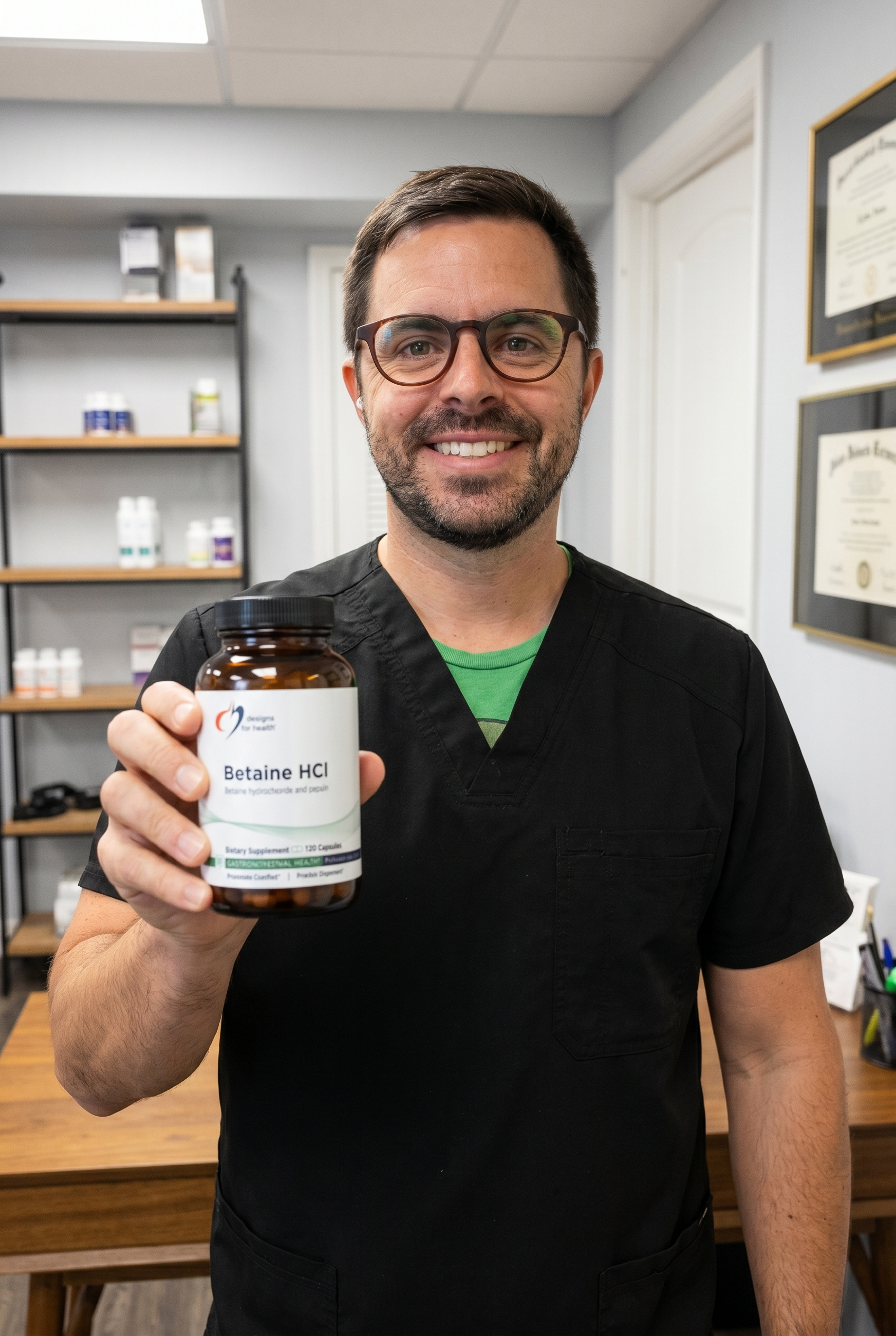
A 61-year-old man came to me with a complaint he found embarrassing: he felt bloated and overly full after almost every meal, especially heavier ones with meat. He would burp for an hour after eating, sometimes felt a little reflux, and often saw undigested food. He had been taking an over-the-counter acid reducer for the reflux for years, and it was not helping the fullness at all. In fact, things seemed to be getting worse.
Here is the twist that surprises a lot of people: many of these symptoms come from too little stomach acid, not too much. Stomach acid is what kicks off protein digestion and signals the rest of the gut to do its job. As we age, and with stress and long-term acid-reducing medication, acid levels can fall, and food sits and ferments instead of digesting, causing fullness, bloating, burping, and even reflux. After we ruled out other causes with his doctor, I had him try Betaine HCl with meals.
With a careful, stepwise approach, the post-meal fullness and bloating eased, his digestion felt more complete, and he was more comfortable after eating than he had been in years. Betaine HCl is a targeted tool, not a daily vitamin, and it has to be used thoughtfully. But for the right person with low stomach acid, it can make a real difference. It is the product I reach for in that specific situation.
Quick verdict: Betaine HCl is the targeted tool I reach for when post-meal fullness, bloating, and burping point to low stomach acid, which is common with age, stress, and long-term acid-blocking drugs.
Order Betaine HCl →What this product is actually doing
Your stomach is supposed to be a very acidic place, and that is by design. Strong stomach acid does several jobs: it starts breaking down protein, it activates pepsin (the enzyme that digests protein), it helps you absorb minerals like iron, calcium, and B12, and it kills off bacteria and other bugs you swallow with food. When acid is too low, all of these jobs suffer.
Low stomach acid is more common than people think, especially with age, ongoing stress, and the long-term use of acid-blocking medications. The frustrating part is that low acid can cause symptoms that feel like high acid, including reflux and indigestion, because food sits in the stomach too long and ferments. That is why people can take an acid reducer for years and still feel terrible: it can be the wrong tool for the actual problem.
Betaine HCl is simply hydrochloric acid in a capsule, the same kind of acid your stomach is meant to make. Taken with a meal, it temporarily restores a more normal acid level so protein digestion can start properly and the rest of the chain falls into place. This version also includes pepsin, the protein-digesting enzyme that acid activates, to support the digestion of protein even further.
What is in Betaine HCl
The formula is simple and targeted:
- Betaine hydrochloride (betaine HCl) (a source of stomach acid to support digestion of a meal)
- Pepsin (the enzyme, activated by acid, that breaks down protein)
Pairing the acid with pepsin is the smart part of this formula. Acid alone restores the environment, but pepsin is the actual scissors that cut protein apart, and it only works in an acidic stomach. Putting them together means you are supporting both the conditions for digestion and the tool that does the digesting, which is exactly what someone with low acid needs for a protein-heavy meal.
Who tends to do well on Betaine HCl
The pattern that responds best:
- People who feel overly full, bloated, or gassy after meals, especially meals with meat
- Those who burp a lot or see undigested food
- Older adults, since stomach acid naturally declines with age
- People who suspect their reflux is actually from low acid, not high acid (worked up with a provider)
- Those low in iron, B12, or other nutrients that need acid to absorb
- People who feel best with a targeted digestive aid only when they eat heavier meals
Who should skip it
- Anyone with a stomach or duodenal ulcer, or active gastritis (adding acid can worsen it; this is the key caution)
- People taking NSAIDs (like ibuprofen) or corticosteroids regularly, which already irritate the stomach lining
- Those on acid-reducing medication, without coordinating with their provider first
- Anyone with reflux or indigestion that has not been properly evaluated, since symptoms overlap with conditions that need real treatment
- People who feel burning rather than relief on a test dose (that is a sign to stop)
Buy Betaine HCl Direct from DFH
Practitioner pricing is applied automatically at checkout. Every bottle ships direct from the Designs for Health warehouse with full quality control. The same product DFH stocks on its own shelves, at the practitioner price tier.
Shop Betaine HCl →How to take it
This one needs a careful, stepwise approach, not a fixed daily dose.
- Take it during or just after a meal that contains protein, not on an empty stomach.
- Start with one capsule with a larger meal and see how you feel.
- If you feel no warmth or discomfort and your symptoms are not better, you can cautiously increase by one capsule at the next similar meal, as directed, until you notice a slight warmth in the stomach, then drop back down.
- Match the dose to the meal: bigger protein meals may need more support, small or plant-based meals little or none.
- If you ever feel burning, heat, or discomfort, that is the signal you have taken too much (or do not need it), so stop and drink some water.
What to expect
- Right away: many people notice less fullness, bloating, and burping after meals
- Over a few meals: you dial in the dose that fits your typical meals
- Over weeks: better digestion can support energy and nutrient levels (like iron and B12)
- This is a meal-time tool, not something you feel all day; you use it when you eat
Side effects
- A warm or burning feeling in the stomach if the dose is too high (back off and it passes)
- Reflux or irritation in people who do not actually have low acid
- Worsening of an existing ulcer or gastritis (the reason to rule those out first)
- Throat or stomach irritation if a capsule is opened or taken without food
What I do not love about it
The biggest risk is using it for the wrong problem. Reflux and indigestion can come from low acid, but they can also come from high acid, an ulcer, an infection like H. pylori, or other conditions that need real treatment. Adding acid to an ulcer or to genuine high-acid reflux can make things considerably worse. I never have someone start Betaine HCl for reflux without first making sure the cause has been looked into with their doctor.
It also takes more attention than most supplements. You cannot just take a fixed pill every day and forget it. The dose depends on the meal, you have to pay attention to how you feel, and you need to back off if you feel warmth or burning. Some people find that fiddly. I think the stepwise method is worth it when low acid is the real issue, but it is not a set-it-and-forget-it product.
And it does not fix the reasons acid got low in the first place. Chronic stress, eating in a rush, and long-term acid-blocking medication all play a role. I use Betaine HCl as support while also helping people slow down at meals, manage stress, and (with their prescriber) revisit whether they still need a daily acid reducer. On its own, without addressing those, it is only half the picture.
For background, see the PMC study on betaine HCl and stomach acidity, the NIH StatPearls overview of stomach physiology and acid, and the NIH NIDDK overview of acid reflux and GERD.
Bottom line
Betaine HCl is the targeted tool I reach for when post-meal fullness, bloating, and burping point to low stomach acid, which is common with age, stress, and long-term acid-blocking drugs. It restores stomach acid for a meal and adds pepsin to digest protein, so food breaks down properly instead of sitting and fermenting. Use it with protein meals, build the dose up carefully, and back off at the first sign of warmth.
Always check with a healthcare provider before starting any new supplement, especially if you have an ulcer or gastritis, take NSAIDs or acid-reducing medication, or have reflux that has not been properly evaluated.
← See all gut health reviews by Dr. Bell
Ready to try Betaine HCl?
It is one I trust enough to use with my own patients and order for my family. Through my DFH store you get the authentic, direct-from-manufacturer product with practitioner pricing applied automatically at checkout.
Order Betaine HCl →Authentic, direct from Designs for Health · practitioner pricing · no third-party counterfeits
About the Author: Dr. Bell
Dr. Bell is a chiropractor and holistic wellness practitioner at Dr. Bell Health. He writes plain-language reviews of Designs for Health supplements based on years of clinical experience. Read more about Dr. Bell.