CraveArrest Review by Designs for Health - Dr. Bell
Designs for Health CraveArrest review by Dr. Bell. A focused craving-control formula using L-tyrosine, 5-HTP, and supporting B vitamins to ease cravings driven by low dopamine and serotonin signaling. Dosing, who benefits, side effects, and an honest look at when cravings need a different approach.

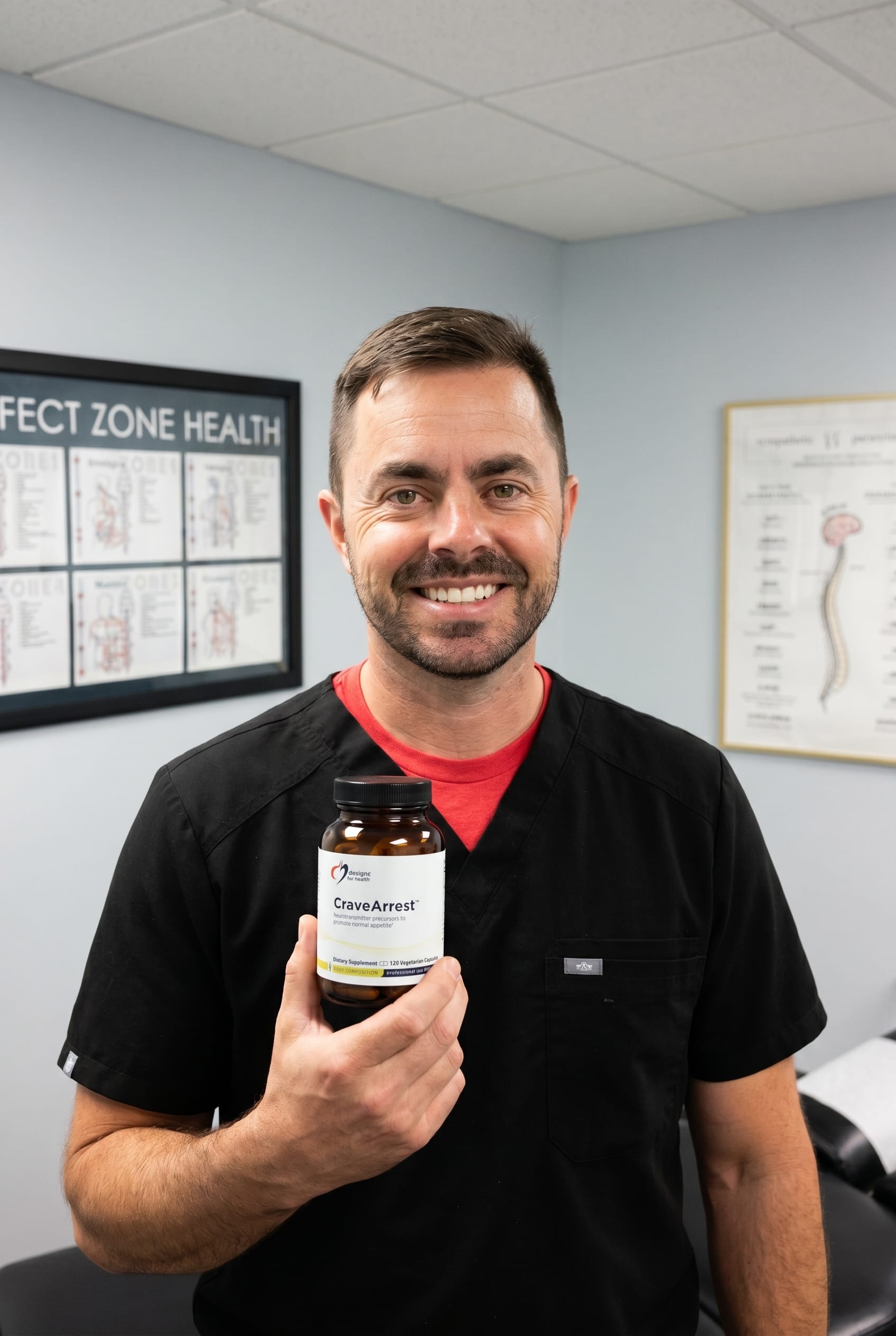
A 39-year-old woman came to me describing a pattern most of my patients recognize: she would eat reasonably well during the day, then by mid-afternoon and especially after dinner the cravings would start, and they were not for vegetables. Sugar and salty snacks felt almost magnetic. She was not stress-eating in a chaotic way; she just felt like her brain demanded the reward of those foods, and willpower alone was not winning. She had read about brain chemistry and cravings and asked whether there was a supplement that addressed the wiring underneath, rather than another generic appetite suppressant.
This is a smart question, because intense cravings are often less about hunger and more about brain chemistry. Two messengers in particular shape cravings: dopamine (the reward and motivation signal that food, sugar, and other rewards hit) and serotonin (the calm, satisfied, full signal that helps you feel content). When either of those signals is running low, the brain tends to chase quick hits of reward, and the easiest source of a fast hit is sugar or comfort food. The idea behind a craving-targeted supplement is to support the production of those messengers so the brain is not constantly searching for a hit. I started her on CraveArrest.
The whole design of CraveArrest is around supporting dopamine and serotonin production with the right amino-acid building blocks and cofactors, and I will explain that below. Used alongside more thoughtful meal structure, she noticed her cravings were easier to manage and she felt more satisfied between meals, which made the rest of her eating plan actually work. A craving-control supplement is not a weight-loss drug and it does not undo a food environment that constantly tempts you, but as targeted support for the brain chemistry behind cravings it can be very useful. CraveArrest is the focused craving-support formula I reach for.
Quick verdict: CraveArrest is the focused craving-support formula I reach for when someone has intense reward-driven cravings, especially for sugar or comfort food, and wants brain-chemistry support rather than a stimulant appetite suppressant.
Order CraveArrest →What this product is actually doing
Two brain chemicals are heavily involved in cravings. Dopamine is the reward and motivation signal; it spikes when you eat sugar or comfort food, and a brain that is running short on dopamine tends to chase quick reward hits. Serotonin is the calm, satisfied, full signal that helps you feel content with what you ate; low serotonin signaling makes it hard to feel satisfied no matter how much you eat. When these messengers are low, willpower has to do more work than it should.
CraveArrest is built to support the body's own production of those two messengers. Rather than acting as a stimulant or an appetite suppressant, it supplies the amino-acid building blocks the brain uses to make dopamine and serotonin, plus the active-form B vitamins that are the cofactors for those conversions. The aim is to support the chemistry first, so the brain feels rewarded and satisfied more easily, and cravings naturally ease as a result.
It does this with a focused, small blend rather than a kitchen sink. L-tyrosine is the amino acid the body uses to build dopamine. 5-HTP (5-hydroxytryptophan) is the direct precursor the body uses to build serotonin (one step closer than tryptophan). Active forms of B6 and other B vitamins are included because they are the spark plugs the body needs to actually convert those amino acids into the neurotransmitters. It is a sensible upstream design.
What is in CraveArrest
The formula is a focused craving-support blend:
- L-tyrosine (the amino acid the body uses to build dopamine, the reward and motivation messenger)
- 5-HTP (5-hydroxytryptophan) (the direct precursor the body uses to build serotonin, the calm and satisfied messenger)
- Vitamin B6 (as pyridoxal-5-phosphate) (the active form of B6, a key cofactor for building both dopamine and serotonin)
- Supporting B vitamins (cofactors that back the amino acids so the conversions actually happen)
The signature choice here is the dopamine-and-serotonin combination. A lot of "mood and craving" products go after only one of those messengers; this one supports both. Pairing the precursor amino acids with the active form of B6 (the cofactor the conversions actually require) means the formula is not just dropping in chemicals, but giving the brain what it needs to make its own. It is a small, sensible, upstream-focused blend.
Who tends to do well on CraveArrest
The pattern that responds best:
- People with intense afternoon and evening cravings, especially for sugar or comfort food
- Those who feel never-quite-satisfied no matter how much they eat (a serotonin-signaling clue)
- People who chase quick reward hits and use food as the easiest source of one
- Those whose cravings are tied to mood, stress, or that "I just need something" feeling
- People who want brain-chemistry support rather than a stimulant appetite suppressant
- Adults working on diet and lifestyle who want the chemistry under the cravings supported
Who should skip it
- Anyone on antidepressants (SSRIs, SNRIs, MAOIs), without provider input — combining serotonin precursors with these is a real risk
- People on prescription dopamine-modulating medication (such as some Parkinson's or psychiatric medications)
- Those with a diagnosed eating disorder or a difficult relationship with food
- People with bipolar disorder, without provider guidance (serotonin precursors can affect mood states)
- Pregnant or breastfeeding women, without provider guidance
- Anyone with carcinoid syndrome or related conditions
Buy CraveArrest Direct from DFH
Practitioner pricing is applied automatically at checkout. Every bottle ships direct from the Designs for Health warehouse with full quality control. The same product DFH stocks on its own shelves, at the practitioner price tier.
Shop CraveArrest →How to take it
Take it on an empty stomach for best results.
- Take the label dose typically away from food and away from protein meals; the amino acids in the formula compete with the amino acids in protein for absorption.
- Many people take it mid-morning and/or mid-afternoon, ahead of their typical craving windows.
- Start at the lower end of the dose range; the brain-chemistry effect is real and you want to find your personal sweet spot.
- Give it a couple of weeks of consistent use before judging it; the effect is gentle and tends to settle in.
- Pair it with the structural piece: regular meals with adequate protein, fiber, and fat (which keep blood sugar steady and reduce cravings independently), sleep, and addressing the stress and habits that trigger your worst craving windows.
What to expect
- Within a couple of weeks: many people notice gentler cravings and an easier sense of being satisfied with meals
- The effect is brain-chemistry support, not the brute appetite suppression of a stimulant
- Best paired with thoughtful meal structure; supplements support, food and routine do the heavy lifting
- Individual responses vary; some feel a clear shift, others feel little
Side effects
- Generally well tolerated at sensible doses
- Mild nausea, especially from 5-HTP on an empty stomach (take with a small snack if needed)
- Headache or vivid dreams in some people
- Serious interaction with antidepressants and other serotonin-affecting medications (do not stack without provider guidance)
What I do not love about it
The single most important caution is the antidepressant interaction, and I never skip it. 5-HTP raises serotonin signaling, and stacking that on top of an SSRI, SNRI, MAOI, or other serotonin-modulating medication can push serotonin too high and cause serotonin syndrome, which is a real medical issue. Anyone on a psychiatric medication absolutely needs to clear this with their prescriber before starting, and in most cases I steer those patients to a different approach. This is not a "probably fine" interaction; it is a known and serious one.
I am also clear that for someone with a difficult relationship with food, a diagnosed eating disorder, or restrictive eating patterns, I do not steer toward a craving-control supplement. The right help is proper support for the eating relationship, not a tool that puts more focus on suppressing the body's signals. The same goes for someone whose "cravings" are really pointing at not eating enough, eating too little protein, or skipping meals; the answer there is better meals, not a pill to override the consequences.
And the food and routine piece is where the real progress comes from. Regular meals with enough protein, fiber, and fat keep blood sugar steady, which reduces cravings independently of any supplement. Sleep deprivation cranks cravings up; sleeping enough drops them. The food environment around you (what is in the house, what is at work) shapes cravings more than willpower does. I use CraveArrest as gentle brain-chemistry support for someone already addressing those structural pieces, with a planned reassessment. For the right person, in the right context, it is a useful tool. For the person hoping a pill will undo a chaotic food environment, it is the wrong answer.
For background, see the PMC review on 5-HTP, serotonin, and appetite, the NIH NIMH overview of eating disorders, and the PMC review on dopamine and food reward.
Bottom line
CraveArrest is the focused craving-support formula I reach for when someone has intense reward-driven cravings, especially for sugar or comfort food, and wants brain-chemistry support rather than a stimulant appetite suppressant. It supplies L-tyrosine (for dopamine) and 5-HTP (for serotonin) along with the active B vitamins the conversions need. Take it away from protein meals, ahead of your craving windows, and pair it with regular meals, sleep, and addressing your environment.
Always check with a healthcare provider before starting any new supplement, and absolutely if you take antidepressants or any other serotonin-affecting medication, have bipolar disorder, an eating disorder, or are pregnant or breastfeeding.
← See all body composition reviews by Dr. Bell
Ready to try CraveArrest?
It is one I trust enough to use with my own patients and order for my family. Through my DFH store you get the authentic, direct-from-manufacturer product with practitioner pricing applied automatically at checkout.
Order CraveArrest →Authentic, direct from Designs for Health · practitioner pricing · no third-party counterfeits
About the Author: Dr. Bell
Dr. Bell is a chiropractor and holistic wellness practitioner at Dr. Bell Health. He writes plain-language reviews of Designs for Health supplements based on years of clinical experience. Read more about Dr. Bell.