Creatine Monohydrate Review by Designs for Health - Dr. Bell
Designs for Health Creatine Monohydrate review by Dr. Bell. Pure micronized creatine for strength, lean muscle, recovery, and brain energy, including its role in healthy aging and muscle preservation. Dosing, who benefits, side effects.

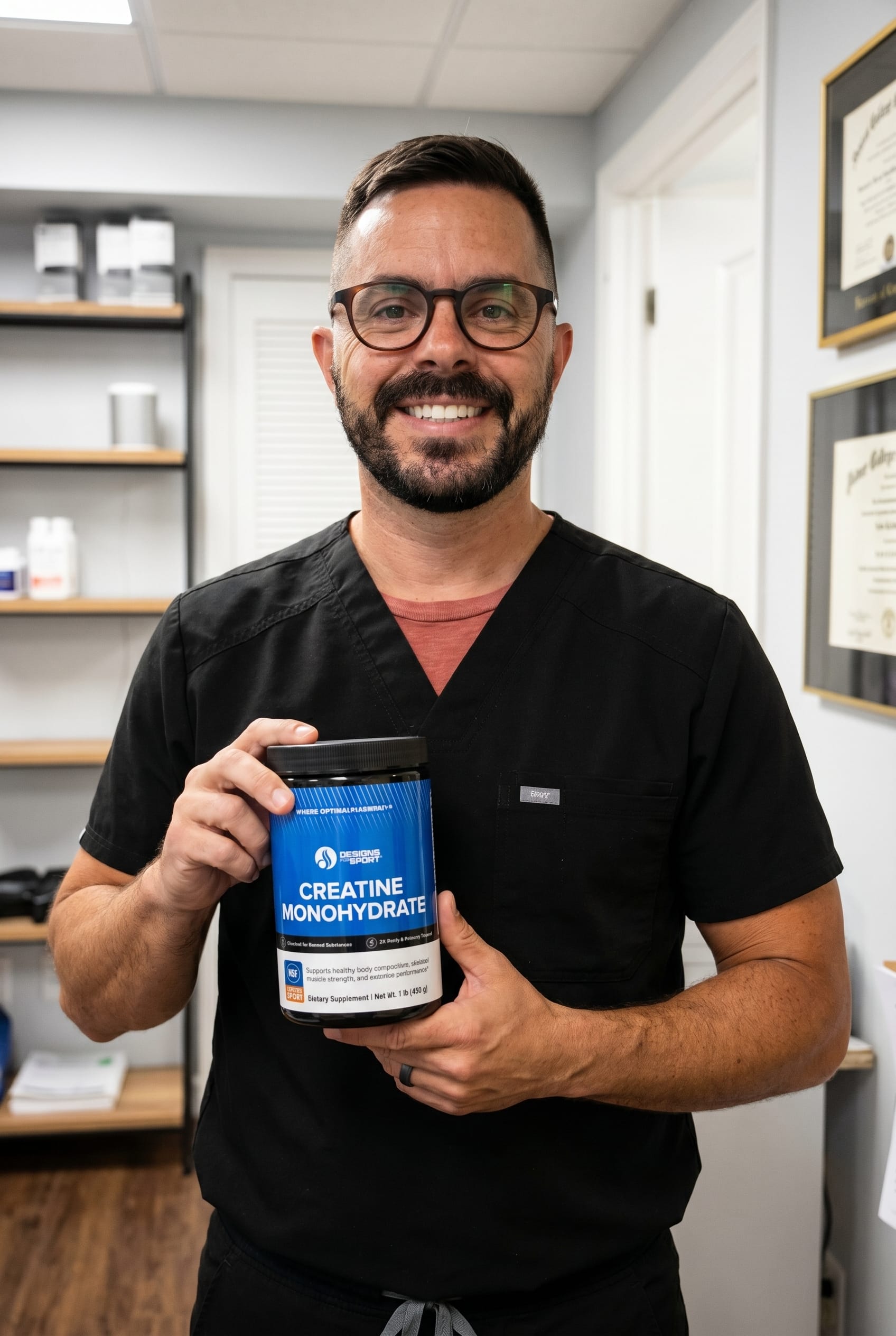
A 62-year-old woman came to me worried that she was getting frail. She had started strength training on her doctor's advice, but progress was slow, she felt weak between sessions, and she had read that losing muscle with age was one of the biggest predictors of how independent she would stay into her seventies and eighties. She asked whether there was anything, beyond the gym itself, that could help her hold onto and build muscle.
My answer was creatine, and her reaction was the one I get from most people over fifty: "Isn't that just for bodybuilders?" It is not. Creatine is one of the most researched supplements in existence, with decades of safety and effectiveness data, and the population that may benefit most is not young athletes but aging adults trying to preserve strength, muscle, and even brain function. I started her on Creatine Monohydrate, 5 grams a day, alongside her training.
Over the next few months her strength climbed faster than before, she recovered better between sessions, and she felt less wiped out on her training days. Creatine is not a stimulant and you do not feel it working in the moment; it works quietly by topping up your cells' energy reserves. Designs for Health Creatine Monohydrate is the simple, pure, micronized creatine I reach for, because with creatine the plain monohydrate form is the one the research actually supports.
Quick verdict: Creatine Monohydrate is one of the few supplements I recommend almost universally to people who strength train, and especially to aging adults trying to preserve muscle and stay strong and independent.
Order Creatine Monohydrate →What this product is actually doing
Your muscles run their fastest, most explosive movements on a fuel system that uses something called phosphocreatine to rapidly regenerate energy. When you lift something heavy, sprint, or push hard for a few seconds, that is the system firing. The catch is that your natural stores of phosphocreatine are limited, which is why a hard effort fades quickly. Supplementing with creatine raises those stores, so you can do a little more work before fatigue sets in.
Over weeks and months, that extra bit of work per session adds up to more strength and more lean muscle. Creatine also pulls a small amount of water into the muscle cells, which supports the muscle-building environment. None of this is dramatic on any single day; the effect is the slow compounding of being able to train a little harder, recover a little better, and build a little more.
The newer and genuinely interesting research is on the brain. The brain is an energy-hungry organ that also uses the phosphocreatine system, and studies suggest creatine may support mental energy, memory, and resilience to sleep deprivation, with the clearest benefits in older adults and vegetarians who start with lower stores. This is why I now think of creatine as a whole-body energy supplement, not just a gym one.
What is in Creatine Monohydrate
This product is refreshingly simple, which is the point:
- Pure creatine monohydrate (the single most studied and proven form, with no fillers or proprietary blends)
- Micronized (the powder is processed to a finer particle size so it mixes more easily and is gentler on the stomach)
- 5 grams per serving (the standard research-backed daily dose)
- Unflavored powder (mixes into water, juice, or a protein shake)
I want to be clear about why the plain monohydrate form matters. The supplement market is full of fancier creatines (hydrochloride, ethyl ester, buffered versions) that cost more and claim to be superior. The research does not support those claims; monohydrate remains the gold standard for effectiveness, safety, and value. Paying more for an exotic form is paying for marketing. A clean, micronized monohydrate is exactly what you want.
Who tends to do well on Creatine Monohydrate
The pattern that responds best:
- Older adults working to preserve or build muscle and prevent age-related muscle loss (sarcopenia)
- Anyone strength training who wants better strength, lean mass, and recovery
- People on GLP-1 medications protecting muscle while losing weight
- Vegetarians and vegans, who get little creatine from food and tend to start low
- Athletes in strength and power sports
- People interested in the cognitive and mental-energy support, especially with age
- Anyone wanting a high-evidence, low-cost supplement that genuinely earns its place
Who should skip it
- People with significant kidney disease or a single kidney (creatine is processed by the kidneys; clear it with your doctor first)
- Anyone with a creatinine level being monitored, without telling their provider (creatine can raise that lab value harmlessly and confuse interpretation)
- Pregnant or breastfeeding women, without provider guidance
- People who expect a result without doing the training (creatine supports work; it does not replace it)
Save on Creatine Monohydrate with Practitioner Pricing
Below standard retail with practitioner pricing applied to every order. No memberships, no minimums, no hoops to jump through. Just direct-from-DFH shipping with my practitioner discount built into the price.
Get Creatine Monohydrate →How to take it
The simplest approach is 5 grams a day, every day, mixed into water or a shake. You do not need to time it precisely.
- You can take it any time of day. Consistency matters far more than timing.
- A "loading phase" (20 grams a day for the first week) saturates your muscles faster, but it is optional. Taking 5 grams daily reaches the same level in about three to four weeks.
- Take it every day, including rest days, because the goal is to keep your muscle stores topped up, not to dose around workouts.
- Drink normal amounts of water. The old worry about creatine and dehydration is not supported by the research, but staying hydrated is sensible anyway.
What to expect
- Week 1: possibly a small bump in body weight from water drawn into the muscle (this is normal and not fat)
- Weeks 2 to 4: muscle stores saturate; many people notice better strength and less fatigue late in workouts
- Weeks 4 to 12: with consistent training, measurable gains in strength and lean muscle
- Cognitive effects, if any, build over weeks and are subtler than the physical ones
- Stop taking it and stores slowly return to baseline over about a month; the muscle you built with training is yours to keep with continued work
Side effects
- Mild water-weight gain in the first week or two (water in the muscle, not bloating)
- Occasional stomach upset, usually from taking too much at once or not enough water (the micronized form helps)
- A harmless rise in the creatinine blood marker, which can be misread as a kidney problem if your doctor does not know you supplement
- Very rarely, mild cramping in people who do not drink enough fluid
What I do not love about it
The biggest frustration with creatine is not the product, it is the persistent myths around it. People still believe it is a steroid (it is not), that it damages the kidneys in healthy people (the evidence does not support this), or that it is only for young men. These myths keep the people who would benefit most, especially older adults, from trying it. I spend more time debunking creatine than recommending it.
The water-weight gain in the first week also throws people off. Someone watching the scale closely sees it tick up and assumes the creatine is making them fat, when it is simply water inside the muscle, which is exactly where you want it. I warn patients in advance so they do not quit on day five.
And the lab quirk is worth repeating: creatine can raise your measured creatinine, a marker doctors use to estimate kidney function. In a healthy person this is harmless and expected, but if your doctor runs the test without knowing you take creatine, it can trigger an unnecessary scare. Always mention it before kidney bloodwork.
For background, see the PMC position stand on creatine supplementation, safety, and exercise, the PMC review on creatine for aging muscle and sarcopenia, and the NIH Office of Dietary Supplements fact sheet covering creatine for performance.
Bottom line
Creatine Monohydrate is one of the few supplements I recommend almost universally to people who strength train, and especially to aging adults trying to preserve muscle and stay strong and independent. It is among the most researched, safest, and best-value supplements available, and the plain micronized monohydrate form is exactly the one the evidence supports. Five grams a day, every day, mixed into water or a shake.
Always check with a healthcare provider before starting any new supplement, especially if you have kidney disease or your kidney function is being monitored.
← See all body composition reviews by Dr. Bell
Ready to try Creatine Monohydrate?
It is one I trust enough to use with my own patients and order for my family. Through my DFH store you get the authentic, direct-from-manufacturer product with practitioner pricing applied automatically at checkout.
Order Creatine Monohydrate →Authentic, direct from Designs for Health · practitioner pricing · no third-party counterfeits
About the Author: Dr. Bell
Dr. Bell is a chiropractor and holistic wellness practitioner at Dr. Bell Health. He writes plain-language reviews of Designs for Health supplements based on years of clinical experience. Read more about Dr. Bell.