Insomnitol Review by Designs for Health - Dr. Bell
Designs for Health Insomnitol review by Dr. Bell. Multi-pathway sleep formula with melatonin, 5-HTP, GABA, L-theanine, valerian, and passionflower for trouble falling asleep, waking at night, and racing-mind insomnia. Dosing, who benefits, side effects.

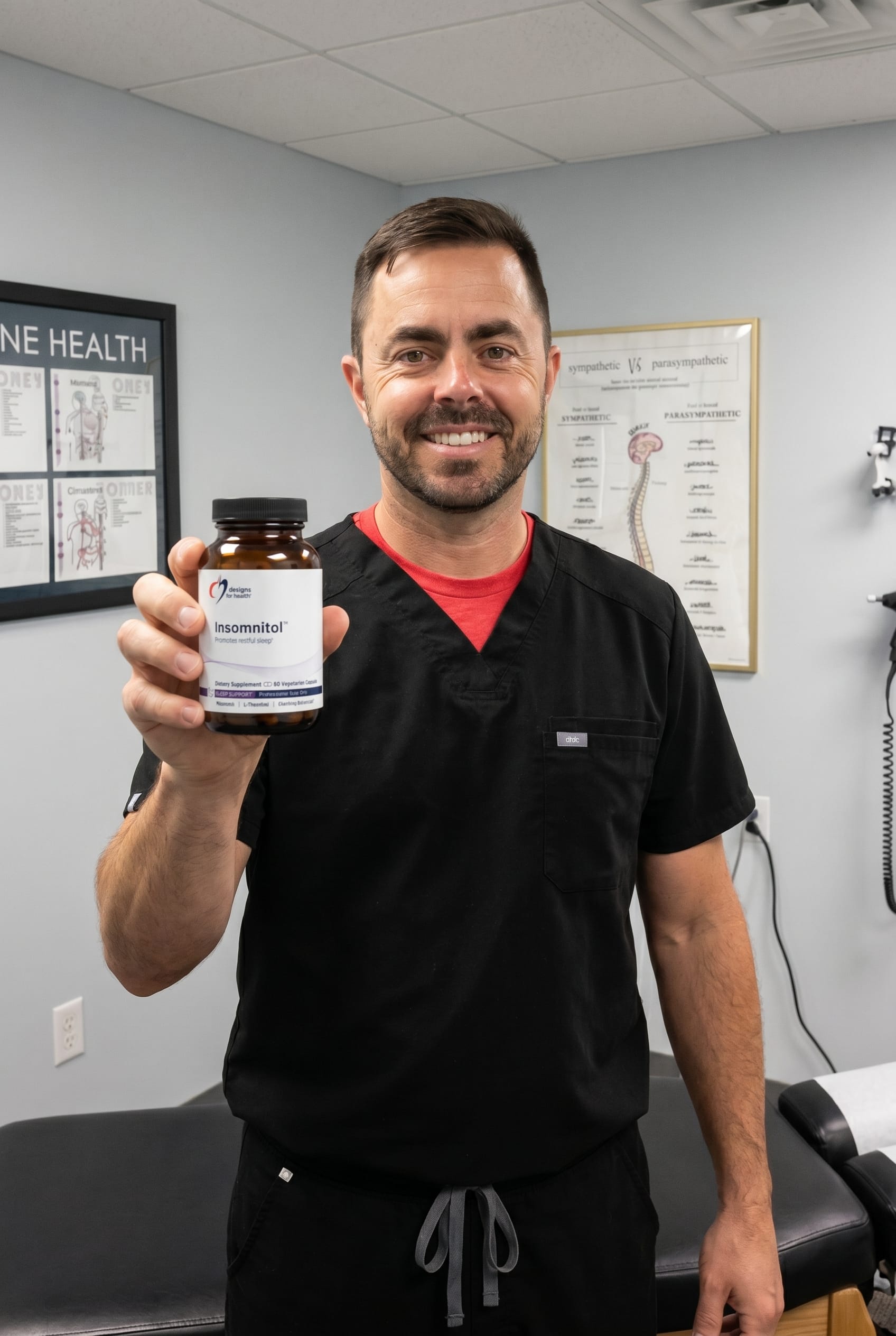
A 41-year-old nurse came to me running on fumes. She worked rotating shifts, and her sleep had fallen apart. She could not fall asleep when she finally got to bed, her mind raced through everything she had not finished, and when she did drift off she woke at 3 a.m. and lay there for an hour. She had tried over-the-counter sleep aids, but they left her groggy and foggy the next day, which is dangerous in her line of work. She wanted to sleep without feeling drugged.
I started her on Insomnitol, two capsules about thirty minutes before bed, along with the unglamorous basics: a consistent wind-down routine, no screens for the last hour, and a dark, cool room. Within a week she was falling asleep faster. Within three weeks the 3 a.m. wake-ups had become occasional rather than nightly, and the morning grogginess that the over-the-counter products gave her was gone.
Sleep is the foundation that everything else stands on. Blood sugar, mood, immune function, weight, and stress hormones all degrade when sleep does. A single-ingredient sleep aid (melatonin alone, for example) only addresses one piece of a problem that usually has several moving parts. Insomnitol is the multi-pathway sleep blend I reach for when one mechanism is not enough.
Quick verdict: Insomnitol is the multi-pathway sleep blend I reach for when one mechanism is not enough: melatonin for sleep onset, 5-HTP and calming amino acids for a racing mind, and gentle botanicals to help people stay asleep.
Order Insomnitol →What this product is actually doing
Falling asleep and staying asleep are two different problems, and they run on different chemistry. Falling asleep depends partly on melatonin, the hormone that signals darkness to your brain. Staying asleep, and quieting a racing mind, depends more on calming neurotransmitters like GABA and serotonin. A formula that hits only one of these will help some people and do nothing for others.
Insomnitol layers several calming pathways together. Melatonin nudges the sleep-onset signal. The serotonin precursor and the calming amino acids quiet mental chatter and support the transition into deeper sleep. The botanicals add a gentle sedative effect that helps people who wake in the night settle back down. Because it works on multiple systems at low individual doses, it tends to feel like natural drowsiness rather than the heavy, hungover sedation of stronger single agents.
This multi-pathway approach is also why it does not usually cause the next-day fog that over-the-counter antihistamine sleep aids (the "PM" products) are known for. Those work by blocking histamine and tend to linger. Insomnitol's ingredients clear faster and work with your own sleep chemistry rather than overriding it.
What is in Insomnitol
The blend pulls together complementary sleep mechanisms:
- Melatonin (signals sleep onset; helps reset the body clock, useful for shift work and jet lag)
- 5-HTP (a direct precursor to serotonin, which the body also converts to melatonin)
- GABA (the brain's main calming neurotransmitter; quiets an overactive mind)
- L-theanine (an amino acid from green tea that promotes calm without sedation)
- Inositol (supports a calm, balanced mood)
- Valerian root (a traditional sedative botanical for sleep)
- Passionflower and lemon balm (gentle calming herbs that ease a racing mind)
- Vitamin B6 (as P5P) (a cofactor the body needs to convert 5-HTP into serotonin)
The melatonin dose here is modest, which is intentional. More melatonin is not better; physiologic doses work as well as large ones for most people and are less likely to leave you groggy. The combination is designed to feel like a gentle push toward sleep from several directions rather than a sledgehammer.
Who tends to do well on Insomnitol
The pattern that responds best:
- Trouble falling asleep at the start of the night
- A racing or anxious mind at bedtime
- Waking in the middle of the night and struggling to fall back asleep
- Shift workers and people with disrupted body clocks
- Jet lag and travel across time zones
- People who got groggy or foggy on over-the-counter "PM" sleep aids
- Stress-driven insomnia where cortisol and a busy mind are the problem
- Perimenopausal sleep disruption (often paired with other support)
- People tapering off prescription sleep medication, under medical guidance
Who should skip it
- Pregnant or breastfeeding women
- Anyone on an SSRI, SNRI, MAOI, or other serotonergic medication (the 5-HTP can combine dangerously; talk to your prescriber first)
- People on prescription sedatives or benzodiazepines (additive sedation)
- Those who need to drive or be on call within several hours of taking it
- People with autoimmune conditions on immune-modulating drugs (melatonin can affect immune signaling; check first)
- Children, unless directed by a pediatric provider
Get Insomnitol at Practitioner Pricing
Direct from Designs for Health, below standard retail. Practitioner pricing is applied automatically at checkout. Every bottle is authentic, properly stored, and ships fast from the DFH warehouse.
Order Insomnitol →How to take it
The typical dose is one to two capsules, thirty to sixty minutes before bed. Start with one and move to two only if one is not enough.
- Take it as part of a wind-down routine, not as you are still working or scrolling. The supplement supports the transition; it cannot override a stimulated nervous system.
- Give yourself a full seven to eight hours of sleep opportunity. Taking it when you only have four or five hours before you have to be up is what causes grogginess.
- For shift work or jet lag, take it timed to your target sleep window, not your current one, to help shift the body clock.
- It is meant for occasional-to-regular use, not necessarily forever. Many people use it to re-establish a sleep pattern and then taper.
What to expect
- Night 1 to 3: most people fall asleep faster; some notice more vivid dreams from the melatonin and 5-HTP
- Week 1: fewer middle-of-the-night wake-ups; the mind settles more easily at bedtime
- Weeks 2 to 4: a more reliable sleep pattern establishes; daytime energy improves as sleep debt clears
- Ongoing: works best alongside good sleep habits; the effect fades if the underlying routine is chaotic
- If you stop: no withdrawal, but if the underlying sleep problem was not addressed it can return
Side effects
- Morning grogginess if the dose is too high or sleep time too short
- Vivid dreams or nightmares from melatonin and 5-HTP in some people
- Mild headache or stomach upset
- Daytime drowsiness if taken too late in the night
- Serotonin-related interactions with antidepressants and other serotonergic drugs (this is the important one)
What I do not love about it
The 5-HTP is the catch. It is an effective ingredient, but it makes this product off-limits for the large number of people on antidepressants without a careful conversation with their prescriber first. Combining serotonergic agents can, in rare cases, cause serotonin syndrome, and that risk means I always screen for it before recommending Insomnitol.
The melatonin, while modest, still produces vivid dreams in a subset of people, and a few find that unpleasant. For those patients I look at a melatonin-free calming formula instead.
And like every sleep supplement, it cannot out-muscle bad sleep hygiene. If someone is drinking coffee at 4 p.m., scrolling in bed, and keeping an irregular schedule, no capsule fixes that. Insomnitol is a genuine help for the chemistry of sleep, but it works with a wind-down routine, not in place of one.
For background, see the PMC review on melatonin for sleep, the PMC review on L-theanine, stress, and sleep, and the NIH NCCIH summary on melatonin.
Bottom line
Insomnitol is the multi-pathway sleep blend I reach for when one mechanism is not enough: melatonin for sleep onset, 5-HTP and calming amino acids for a racing mind, and gentle botanicals to help people stay asleep. Take one to two capsules thirty to sixty minutes before bed, give yourself a full night of sleep opportunity, and pair it with a real wind-down routine.
Always check with a healthcare provider before starting any new supplement, especially if you take an antidepressant or other serotonergic medication, a prescription sedative, or are pregnant. Sleep problems that persist for weeks deserve a medical evaluation, since chronic insomnia can have underlying causes worth treating.
← See all stress, mood and sleep reviews by Dr. Bell
Ready to try Insomnitol?
It is one I trust enough to use with my own patients and order for my family. Through my DFH store you get the authentic, direct-from-manufacturer product with practitioner pricing applied automatically at checkout.
Order Insomnitol →Authentic, direct from Designs for Health · practitioner pricing · no third-party counterfeits
About the Author: Dr. Bell
Dr. Bell is a chiropractor and holistic wellness practitioner at Dr. Bell Health. He writes plain-language reviews of Designs for Health supplements based on years of clinical experience. Read more about Dr. Bell.