Liposomal Glutathione Review by Designs for Health - Dr. Bell
Designs for Health Liposomal Glutathione review by Dr. Bell. High-absorption reduced glutathione for detox support, oxidative stress, immune function, chronic fatigue, post-COVID, and healthy aging. Dosing, who benefits, side effects.

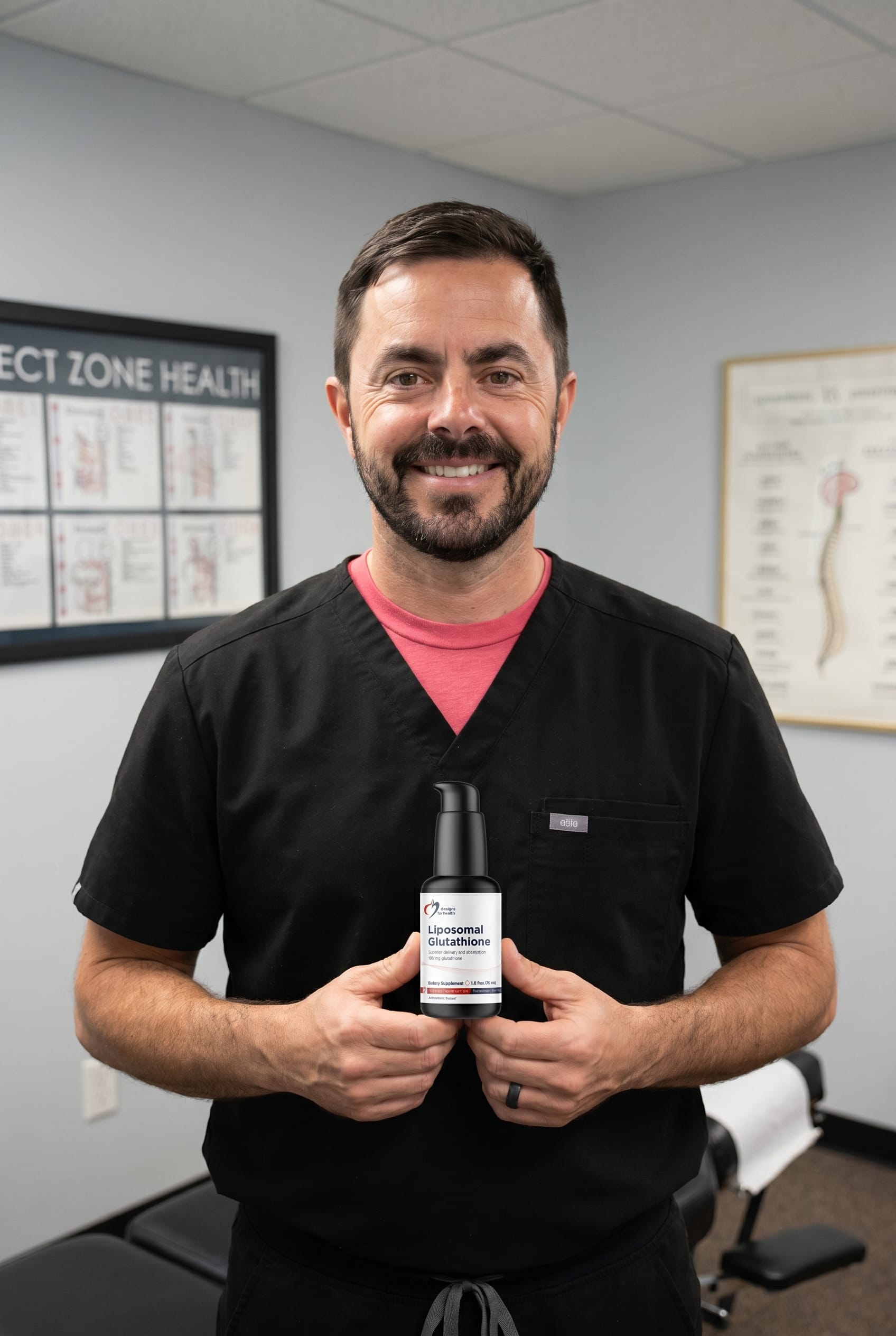
A 58-year-old patient came to me eight months after a tough COVID infection. He had been athletic and energetic before the illness. After it he could not get back to himself. Fatigue, brain fog, exercise intolerance, and a general sense that his recovery had stalled. His primary care workup was clean: normal CBC, thyroid, cortisol, vitamin D. He was technically healthy on paper but did not feel that way.
I started him on Liposomal Glutathione, one teaspoon a day on an empty stomach. Within three weeks his energy was meaningfully better. By eight weeks his exercise tolerance had returned to roughly 80% of baseline, and his brain fog had lifted. He still was not back to 100% (post-viral recovery often takes a year or more), but he had clearly turned a corner.
Glutathione is the body's master antioxidant. It is the molecule the liver uses to detoxify almost everything (medications, environmental toxins, heavy metals, alcohol, oxidative metabolic byproducts). It is the antioxidant that recycles other antioxidants (vitamin C, vitamin E). Levels drop with age, illness, chronic infection, alcohol use, environmental toxin exposure, and oxidative stress in general. Glutathione is also notoriously hard to supplement because most oral forms break down in the gut. Liposomal Glutathione solves that absorption problem.
Quick verdict: Liposomal Glutathione is the high-absorption antioxidant product I reach for when patients have post-viral fatigue, chronic environmental exposure, heavy alcohol history, high prescription medication load, mold/mycotoxin recovery, or aging-related oxidative stress.
Order Liposomal Glutathione →What this product is actually doing
Glutathione is a tripeptide (three amino acids: glutamate, cysteine, and glycine). Every cell in your body makes it and uses it as the main intracellular antioxidant. The reduced form (GSH) is the active one; oxidized glutathione (GSSG) is the spent form. The ratio of reduced to oxidized glutathione is one of the most sensitive markers of cellular oxidative status.
Plain oral glutathione has poor bioavailability. The gut breaks the tripeptide back into its component amino acids, and only a small fraction of the intact molecule reaches the bloodstream. Researchers have addressed this in three main ways: IV glutathione (requires a clinic), inhaled or nebulized glutathione (used for some pulmonary conditions), and liposomal encapsulation (where the glutathione is wrapped in a phospholipid bubble that protects it through the stomach and delivers it intact to cells).
Liposomal Glutathione uses the third approach. Each teaspoon delivers 450 mg of reduced glutathione wrapped in phosphatidylcholine liposomes. Studies on similar liposomal preparations show meaningfully higher blood and tissue levels than equivalent doses of plain oral glutathione.
The clinical effects span energy, immune function, detoxification capacity, and recovery from oxidative stress. Patients who feel best on it usually fall into a few patterns: post-viral fatigue, chronic environmental exposure (mold, heavy metals, pesticides), heavy alcohol history, long-term medication burden, or aging-related oxidative stress.
What is in Liposomal Glutathione
One teaspoon (5 mL) contains:
- Reduced glutathione (GSH), 450 mg
- Phosphatidylcholine (liposomal carrier), 800 mg
- Vitamin C (as ascorbic acid), 20 mg
- Glycerin and natural citrus flavor
The phosphatidylcholine is not filler. It is the liposome itself, plus it has standalone benefits for liver function and cell membrane integrity. The small dose of vitamin C helps keep the glutathione in the reduced (active) form.
The taste is mild citrus, sometimes described as slightly sulfurous (glutathione naturally has a faint sulfur note because of the cysteine). Most patients find it tolerable. Holding it under the tongue for 30 seconds before swallowing is said to further boost absorption through the oral mucosa.
The product comes in a 1.7 fluid ounce bottle, which is about a 10-day supply at one teaspoon a day. It is one of the pricier products in the DFH catalog per dose, which reflects the cost of high-purity reduced glutathione and the liposomal preparation.
Who tends to do well on Liposomal Glutathione
The pattern that responds best:
- Post-COVID or post-viral fatigue that has not fully resolved
- Chronic fatigue with no clear etiology
- Mold or mycotoxin exposure recovery
- Heavy metal detoxification protocols (under your prescriber's care)
- Heavy alcohol history or current high alcohol intake
- Patients on multiple prescription medications who feel the liver is stressed
- Chemical sensitivity / multiple chemical sensitivity
- Chronic environmental exposure (pesticides, solvents, fragrances)
- Adults over 50 with general aging-related oxidative stress
- Patients with autoimmune conditions where oxidative stress contributes
- Parkinson's disease patients (under neurologist's input; some research support)
- Patients with NAFLD (non-alcoholic fatty liver disease) and elevated liver enzymes
- Athletes with high oxidative load and slow recovery
- Patients in cancer survivorship (under oncologist's input; complex topic)
Who should skip it
- Patients receiving active chemotherapy without their oncologist's explicit input (glutathione can interact with certain chemo drugs)
- People with severe sulfur sensitivity
- Pregnant or nursing women without their prescriber's input
- Patients with active asthma who have had bronchospasm with sulfur-containing supplements
- People with severe liver failure (talk to your hepatologist)
- Patients on medications metabolized by glutathione conjugation (acetaminophen is the main one; glutathione is protective here, but very high doses could theoretically alter metabolism)
- Anyone with a confirmed allergy to soy lecithin or sunflower lecithin (the phospholipid carrier)
Save on Liposomal Glutathione with Practitioner Pricing
Below standard retail with practitioner pricing applied to every order. No memberships, no minimums, no hoops to jump through. Just direct-from-DFH shipping with my practitioner discount built into the price.
Get Liposomal Glutathione →How to take it
One teaspoon (5 mL) per day on an empty stomach. Hold under the tongue for 20 to 30 seconds, then swallow. Wait at least 15 minutes before eating or drinking anything else.
For aggressive detox or post-viral recovery: two teaspoons a day, taken morning and afternoon, on an empty stomach. Do not take at bedtime; some patients feel mildly energized.
For maintenance and prevention: one teaspoon every other day, or one teaspoon a day for the first month and then taper to maintenance.
Keep refrigerated after opening. Glutathione oxidizes faster at room temperature, so the bottle holds its potency longer in the fridge.
Pair with the precursor nutrients: N-acetyl cysteine (NAC), alpha-lipoic acid, and adequate protein (especially cysteine-rich foods like eggs and poultry). The body can make its own glutathione if it has the building blocks. Supplemental glutathione gives a faster, more reliable boost, but the underlying production pathway still matters.
What to expect
- Days 1 to 7: some patients feel a clear energy lift within a week. Others feel nothing yet.
- Weeks 2 to 4: brain fog often eases. Energy steadies. Skin sometimes clears (especially in patients with environmental skin issues).
- Weeks 4 to 8: full effect in responders. Lab markers of oxidative stress (8-OHdG, lipid peroxidation, GGT in some patients) often improve.
- 3 to 6 months: full integration. Patients who use this as part of a broader anti-aging or detox protocol see sustained benefits.
- Some patients experience a temporary worsening in the first week as mobilized toxins move through the system. Reduce dose if severe; pair with a binder (activated charcoal, modified citrus pectin) and increase water intake.
Side effects
- Very well tolerated for most people.
- Mild GI upset (nausea, gas) in the first week. Take with food if needed.
- Sulfurous smell or taste, transient
- Detox reaction in patients with high toxin load: headache, fatigue, brain fog for a few days as toxins mobilize. Reduce dose; add binder.
- Mild over-stimulation in sensitive patients. Avoid evening dosing.
- Rare allergic reaction
- Possible drug interactions: glutathione can affect the metabolism of acetaminophen and certain chemotherapy drugs. Talk to your pharmacist or oncologist.
What I do not love about it
The cost. Liposomal Glutathione is one of the most expensive products per daily dose in the DFH catalog. For patients who cannot afford it long-term, I sometimes switch to NAC (a glutathione precursor at much lower cost) as a maintenance option, while reserving the liposomal product for acute periods of high detox need.
The taste. Glutathione has a faint sulfur smell that some patients find unpleasant. Holding it under the tongue actually amplifies the taste; some patients prefer to mix it into a small amount of cold water and drink it quickly. Absorption may be slightly lower this way, but for taste-sensitive patients it is the difference between taking the product and quitting it.
And: glutathione is a downstream antioxidant. It does its best work in patients who have already done the upstream work: adequate protein intake, sulfur-rich vegetables (broccoli, garlic, onions), reduced toxin exposure where possible, and the precursor nutrients. Patients who try to supplement their way past lifestyle exposures see partial results at best.
For background, see the PMC review on glutathione bioavailability and supplementation, the PMC review on glutathione and aging, and the Linus Pauling Institute review of glutathione.
Bottom line
Liposomal Glutathione is the high-absorption antioxidant product I reach for when patients have post-viral fatigue, chronic environmental exposure, heavy alcohol history, high prescription medication load, mold/mycotoxin recovery, or aging-related oxidative stress. The liposomal preparation actually delivers usable glutathione to cells (unlike most oral glutathione products). One teaspoon a day on an empty stomach, held briefly under the tongue. Two teaspoons during active detox or post-viral recovery.
Always check with a healthcare provider before starting any new supplement, especially if you are pregnant, receiving cancer treatment, or take medications that interact with glutathione.
← See all healthy aging reviews by Dr. Bell
Ready to try Liposomal Glutathione?
It is one I trust enough to use with my own patients and order for my family. Through my DFH store you get the authentic, direct-from-manufacturer product with practitioner pricing applied automatically at checkout.
Order Liposomal Glutathione →Authentic, direct from Designs for Health · practitioner pricing · no third-party counterfeits
About the Author: Dr. Bell
Dr. Bell is a chiropractor and holistic wellness practitioner at Dr. Bell Health. He writes plain-language reviews of Designs for Health supplements based on years of clinical experience. Read more about Dr. Bell.