Osteoben Review by Designs for Health - Dr. Bell
Designs for Health Osteoben review by Dr. Bell. A bone-support formula pairing calcium and magnesium malate with vitamin D, vitamin K2, zinc, and non-soy genistein to direct calcium into bone. Dosing, who benefits, side effects, and how it differs from plain calcium.

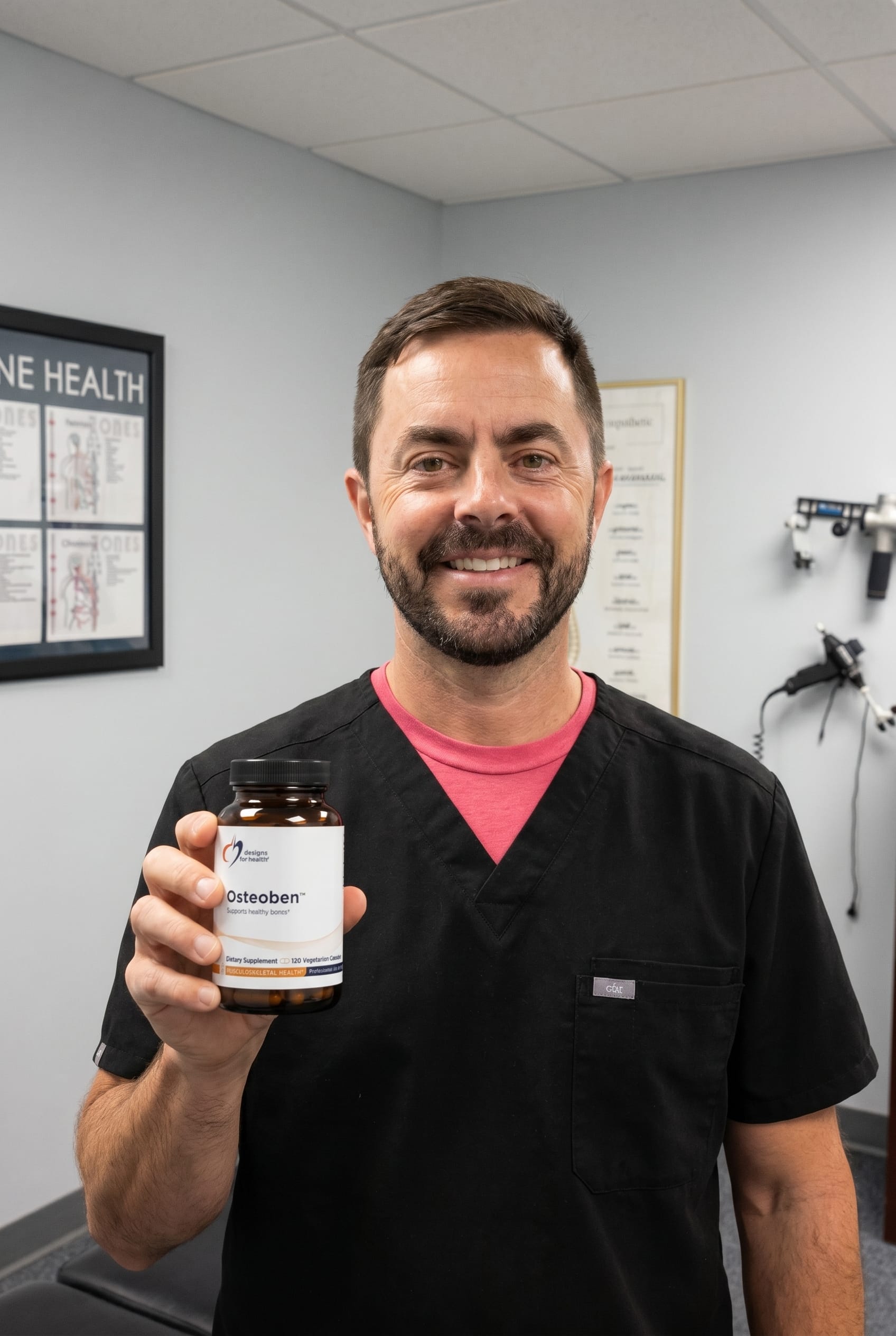
A 58-year-old woman came to me after a routine bone-density scan came back showing the early thinning that sits between fully normal and osteoporosis. Her physician was not ready to start a prescription bone medication yet but wanted her to be proactive: weight-bearing exercise, enough protein, and a smart approach to the nutrients bone is built from. She had a bottle of plain calcium in her cabinet and asked whether that was enough, or whether she should be doing something more thoughtful.
This is one of the most common and important questions I get from women in midlife, and the honest answer is that bone is not built from calcium alone. Calcium is the raw material, but the body needs a team of other nutrients to actually pull that calcium into bone and lay it down properly, and to keep it out of places it does not belong, like the arteries. Taking high-dose calcium by itself, without that supporting cast, is both less effective and not the approach I prefer. A well-designed bone formula brings the whole team together. I talked her through it and started her on Osteoben.
What makes Osteoben distinct is that it pairs sensible, well-absorbed calcium and magnesium with the specific cofactors, vitamin D, vitamin K2, zinc, and a non-soy form of genistein, that help calcium actually reach bone, and I will explain that below. Used alongside her exercise and diet, it gave her a thoughtful nutritional foundation while she worked to protect her bone density. A bone supplement is not a substitute for medical care when a prescription is warranted, but as targeted bone-support nutrition it is one of my go-to formulas. Osteoben is the bone-support product I reach for.
Quick verdict: Osteoben is the bone-support formula I reach for when someone wants more than plain calcium.
Order Osteoben →What this product is actually doing
Bone is living tissue that is constantly being broken down and rebuilt. To build it well, the body needs more than just calcium. It needs vitamin D to absorb calcium from the gut in the first place, vitamin K2 to help steer that calcium into the bone matrix rather than into soft tissue like arteries, magnesium as a structural and enzymatic partner, and trace minerals like zinc that participate in bone formation. Take calcium without these and you are handing the body bricks with no mortar and no crew.
Osteoben is built around that whole-team idea. The calcium and magnesium come as malate forms, which are generally well tolerated and absorbed. Vitamin D is included to drive calcium absorption. Vitamin K2 is there for the crucial job of directing calcium into bone and away from arteries. Zinc supports the bone-building machinery. And the formula adds genistein, a plant compound (an isoflavone) studied for supporting bone health in the postmenopausal years, in a non-soy form so it suits people avoiding soy.
So rather than being a calcium pill, Osteoben is a coordinated bone-support formula: the mineral raw materials plus the specific cofactors that determine whether those minerals actually end up strengthening bone. For someone in the proactive, protect-my-bone-density stage, that coordinated approach is exactly what I want to see on the label.
What is in Osteoben
The formula brings the bone-building team together:
- Calcium (as di-calcium malate), 400 mg per serving (the raw material, in a well-tolerated, absorbable form)
- Magnesium (as di-magnesium malate), 400 mg per serving (a structural partner to calcium and a cofactor in bone metabolism)
- Vitamin D (as cholecalciferol), 1,000 IU (drives calcium absorption from the gut)
- Vitamin K2 (as menaquinone-4), 20 mcg (helps direct calcium into bone and away from soft tissue)
- Zinc (as bisglycinate chelate), 8 mg (supports the bone-formation machinery)
- Genistein (non-soy isoflavone), 54 mg (a plant compound studied for bone support in postmenopausal women)
The defining feature is the cofactor team around the calcium. The presence of vitamin K2 in particular is what separates a thoughtful bone formula from a plain calcium tablet: K2 is the nutrient that helps make sure the calcium you are taking goes into bone rather than building up where you do not want it. Pairing the well-absorbed malate minerals with D, K2, zinc, and genistein makes this a coordinated bone-support product rather than a single-mineral supplement. Note that the calcium dose here is modest by design, meant to complement dietary calcium, not to be your only source.
Who tends to do well on Osteoben
The pattern that fits best:
- Peri- and postmenopausal women being proactive about bone density
- People with early bone thinning (low bone mass) whose provider wants a nutrition-first approach before, or alongside, other steps
- Those who want a complete bone formula with the cofactors, not just plain calcium
- People avoiding soy who still want the bone-support benefit of genistein
- Adults whose diet is light on calcium-rich foods and who want a sensible, complementary dose
- Anyone building bone nutrition on top of weight-bearing exercise and adequate protein
Who should skip it
- Anyone with diagnosed osteoporosis who needs to follow their provider's full treatment plan; this is support, not a replacement for prescribed therapy when it is warranted
- People on warfarin or other vitamin-K-sensitive blood thinners, because the vitamin K2 can interfere, so this needs provider coordination
- Those with kidney disease, high blood calcium, or a history of calcium-based kidney stones, without provider guidance
- People already taking other calcium or vitamin D supplements, who should add up the totals with their provider to avoid overshooting
- Pregnant or breastfeeding women, without provider guidance
Save on Osteoben with Practitioner Pricing
Below standard retail with practitioner pricing applied to every order. No memberships, no minimums, no hoops to jump through. Just direct-from-DFH shipping with my practitioner discount built into the price.
Get Osteoben →How to take it
Take it with food and count it as part of your total.
- Take the label dose, typically four capsules per day, ideally split and taken with meals; calcium absorbs better in smaller amounts with food.
- Add up all your sources. Combine the calcium and vitamin D here with what you get from food and any other supplements so you hit a sensible total rather than overshooting.
- Pair it with the things that actually build bone: weight-bearing and resistance exercise, adequate protein, and overall good nutrition.
- If you take warfarin, do not start a K2-containing product without talking to the provider who manages your dosing.
- Judge bone progress on follow-up density scans over years, not on how you feel day to day.
What to expect
- This is long-game, under-the-hood nutrition; you will not feel it working day to day
- The goal is to support bone density over months and years, tracked by scans, alongside exercise and diet
- It complements dietary calcium and the cofactors bone needs; it does not replace prescribed therapy when that is indicated
- Best results come from consistency plus the weight-bearing exercise that signals bone to stay strong
Side effects
- Generally well tolerated
- Mild digestive upset, gas, or constipation in some people; taking with food and splitting the dose helps
- Vitamin K2 can interfere with warfarin and similar blood thinners
- Excess total calcium from all sources is not benign, so adding up your intake matters
What I do not love about it
My first caution is about stacking calcium without keeping track. Because so many products and foods contain calcium and vitamin D, it is easy to end up taking more than you need across several sources, and more calcium is not automatically better, in fact, very high supplemental calcium has its own concerns. I always have people add up their total intake from diet plus all supplements with their provider, rather than assuming a bone formula should be piled on top of everything else.
The second is the warfarin issue. The vitamin K2 that makes this a smart bone formula is the very thing that can interfere with warfarin and similar blood thinners, because those drugs work by blocking vitamin K. Anyone on that kind of medication should not start a K2-containing product without looping in the provider who manages their dosing. It is a manageable issue, but it is a real one, and it is exactly the sort of thing people miss when they grab a bone supplement off the shelf.
And I am clear that a supplement is the support act, not the headliner, for bone. The things that most powerfully protect bone density are weight-bearing and resistance exercise, adequate protein and overall nutrition, not smoking, sensible alcohol, and, when the situation warrants it, the medications your physician prescribes. Osteoben gives the body a well-designed set of raw materials and cofactors to build with, but it cannot substitute for the mechanical loading that actually tells bone to stay strong, or for prescribed therapy when bone loss has advanced. For the proactive person doing the exercise and working with their provider, it is a thoughtful, complete bone-nutrition foundation.
For background, see the NIH Office of Dietary Supplements fact sheet on calcium, the NIH Osteoporosis and Related Bone Diseases resource, and the PMC review on vitamin K2 and bone health.
Bottom line
Osteoben is the bone-support formula I reach for when someone wants more than plain calcium. It pairs well-absorbed calcium and magnesium malate with the cofactors bone actually needs, vitamin D to absorb calcium, vitamin K2 to direct it into bone, zinc, and a non-soy genistein for postmenopausal bone support. Take it with meals in divided doses, count it as part of your total calcium and D intake, and build it on the weight-bearing exercise and protein that do the real work.
Always check with a healthcare provider before starting any new supplement, especially if you take warfarin or other blood thinners, have kidney disease or a history of calcium stones, take other calcium or vitamin D products, or are pregnant or breastfeeding.
← See all bones, joints and muscles reviews by Dr. Bell
Ready to try Osteoben?
It is one I trust enough to use with my own patients and order for my family. Through my DFH store you get the authentic, direct-from-manufacturer product with practitioner pricing applied automatically at checkout.
Order Osteoben →Authentic, direct from Designs for Health · practitioner pricing · no third-party counterfeits
About the Author: Dr. Bell
Dr. Bell is a chiropractor and holistic wellness practitioner at Dr. Bell Health. He writes plain-language reviews of Designs for Health supplements based on years of clinical experience. Read more about Dr. Bell.