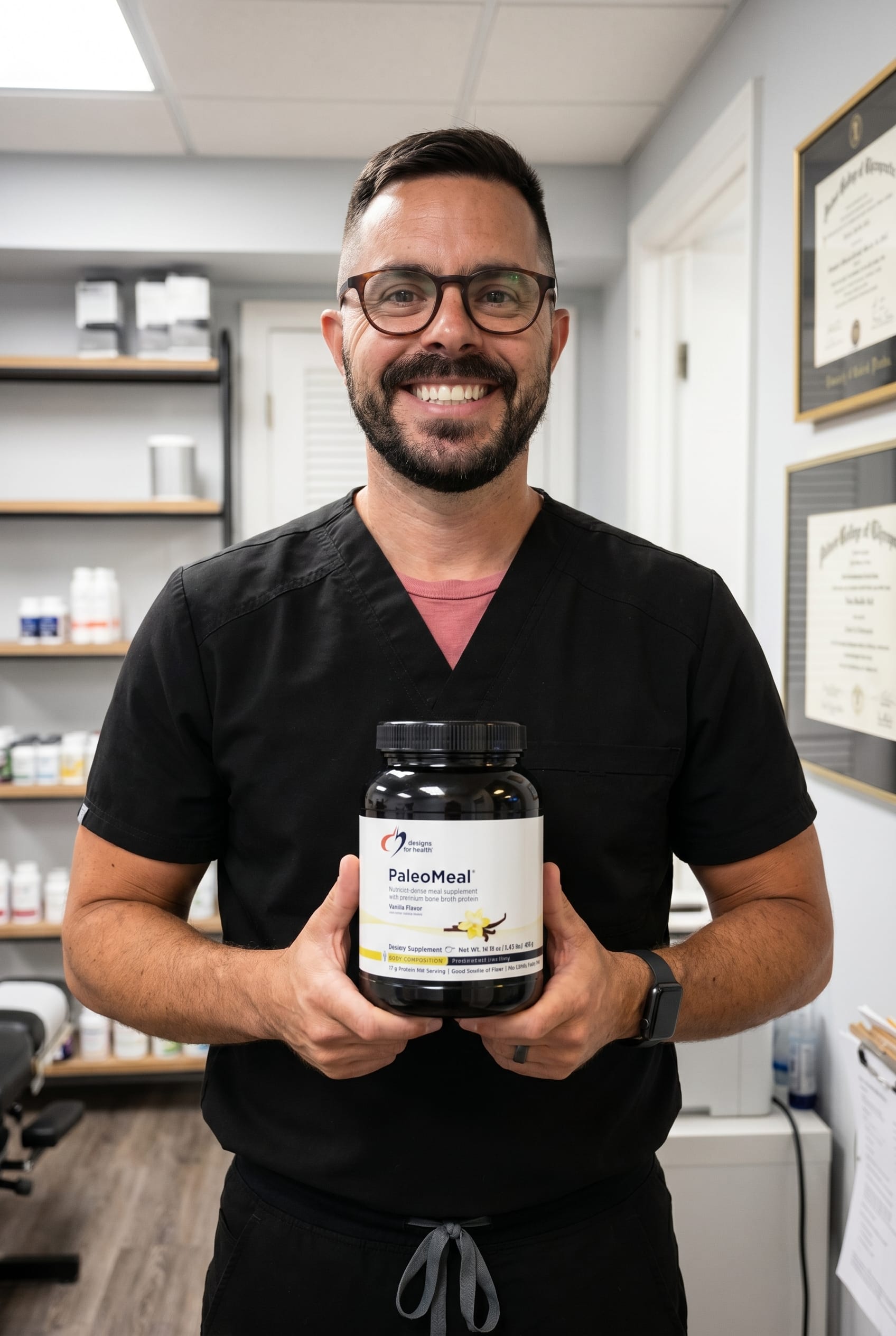
PaleoMeal Review by Designs for Health - Dr. Bell
Designs for Health PaleoMeal review by Dr. Bell. Whey and pea protein meal-replacement shake for lean-muscle preservation on GLP-1 medications, satiety, blood sugar control, and post-workout recovery. Dosing, who benefits, side effects.

A 49-year-old woman on tirzepatide for weight management came to me worried about something her scale could not show her. She had lost 31 pounds, which she was thrilled about, but she had also noticed her arms looked soft and her strength in the gym was dropping. She was right to be concerned. On GLP-1 medications, a large share of the weight people lose can be muscle, not just fat, because appetite suppression makes it hard to eat enough protein to protect lean tissue.
This is one of the most under-appreciated problems with the GLP-1 era. Losing weight is easy to celebrate; losing muscle is easy to miss until your strength, metabolism, and resilience have quietly eroded. I started her on PaleoMeal, one to two scoops in water or milk once a day, usually as a morning shake when her appetite was at its lowest. The goal was simple: hit a protein target she could not reach with food alone while her appetite was suppressed.
Three months later her weight had continued down, but her grip strength and gym numbers had recovered, and a body-composition scan showed she had held onto her lean mass. Protein is the single most important nutrient for anyone losing weight, and PaleoMeal is the protein shake I reach for when patients need a clean, complete, easy-to-drink source.
Quick verdict: PaleoMeal is the protein meal-replacement shake I reach for when patients need to protect muscle while losing weight, especially on GLP-1 medications where suppressed appetite makes hitting a protein target with food nearly impossible.
Order PaleoMeal →What this product is actually doing
Protein does three things that matter enormously during weight loss. It preserves muscle, which keeps your metabolism from crashing as you lose weight. It is the most satiating of the three macronutrients, so it blunts hunger. And it has the highest thermic effect, meaning your body burns more calories digesting it than it does fat or carbohydrate.
For GLP-1 patients specifically, protein is the safeguard against the muscle loss that the medication's appetite suppression encourages. The research target for protein during active weight loss is high (roughly 1.2 to 1.6 grams per kilogram of body weight), and almost nobody hits that on a suppressed appetite eating whole food alone. A shake bridges that gap because liquid protein is easy to get down even when solid food feels like too much.
PaleoMeal is built around whey protein, which is the gold standard for muscle preservation because it is high in leucine, the amino acid that triggers muscle protein synthesis. It is not just protein powder, though; it includes added vitamins, minerals, and fiber, which makes it function as a genuine meal replacement rather than a bare protein scoop.
What is in PaleoMeal
The formula is a complete meal-replacement base:
- Whey protein concentrate and isolate (from grass-fed cows; high in leucine for muscle preservation)
- Around 20 to 25 grams of protein per serving (depending on scoop count)
- A vitamin and mineral base (so it works as a meal, not just a protein top-up)
- Added fiber (for satiety and digestive support)
- Medium-chain triglycerides and healthy fats (for sustained energy and satiety)
- Naturally flavored (vanilla and chocolate options; sweetened without artificial sweeteners)
For patients who do not tolerate dairy, DFH makes PaleoMeal-DF, a dairy-free version built on pea and rice protein. The whey-based original is the better choice for pure muscle-preservation goals because of its leucine content, but the dairy-free version is a strong alternative for anyone with a sensitivity.
Who tends to do well on PaleoMeal
The pattern that responds best:
- People on GLP-1 medications who need to protect lean muscle while losing weight
- Anyone losing weight who struggles to hit a protein target with food alone
- Older adults trying to preserve or rebuild muscle (sarcopenia prevention)
- Busy people who skip breakfast and want a real meal in a glass
- Post-workout recovery for active people and athletes
- Bariatric surgery patients with high protein needs and small stomach capacity
- People recovering from illness or surgery who need easy, dense nutrition
- Anyone wanting a cleaner meal-replacement than the typical sugary store options
Who should skip it
- People with a dairy or whey allergy (use PaleoMeal-DF instead)
- Those with advanced kidney disease (protein loads need medical oversight)
- Anyone advised to limit protein for a specific medical reason
- People who simply prefer to get their protein from whole food and can hit their target that way
- Severe lactose intolerance (whey isolate is lower in lactose, but sensitive people may still react)
PaleoMeal Direct from the Manufacturer
Most supplements are heat- and humidity-sensitive, and potency drops fast in a third-party warehouse. Buying through my DFH store means your bottle goes from their climate-controlled facility straight to your door, at practitioner pricing.
Order PaleoMeal →How to take it
Blend or shake one to two scoops in 8 to 12 ounces of water, milk, or a dairy-free alternative.
- For GLP-1 patients: have it as a morning shake when appetite is lowest, so you bank protein early in the day before food aversion sets in.
- For muscle preservation: aim to spread protein across the day, and use the shake to fill whichever meal you tend to skimp on.
- For post-workout: drink it within an hour or two of training to support recovery.
- Add berries, a tablespoon of nut butter, or a handful of greens to turn it into a more complete meal if you are replacing breakfast or lunch.
What to expect
- Immediately: a filling, satisfying shake that holds hunger for hours
- Weeks 1 to 4: easier to hit protein targets; fewer energy dips; better workout recovery
- Weeks 4 to 12: on a scale plus body-composition tracking, lean mass holds even as weight drops
- Ongoing: strength and metabolism are protected, which is the whole point during weight loss
- This is a tool to hit protein targets, not a magic weight-loss product on its own
Side effects
- Bloating or gas in lactose-sensitive people (consider the dairy-free version)
- Digestive upset if you are not used to a higher protein or fiber intake
- Too many calories if added on top of normal meals rather than replacing one
- Allergic reaction in those with a dairy or whey allergy
What I do not love about it
It is a tub of powder, and powders take effort: a blender or shaker, cleanup, and the discipline to actually make it on busy mornings. The patients who succeed build it into a routine; the ones who leave the tub in the cupboard do not benefit. There is no way around the fact that a shake requires you to make the shake.
The whey base also rules it out for people with a true dairy allergy, who need to go to the dairy-free version and accept a slightly lower leucine content. And for anyone who can comfortably hit their protein target with whole food (eggs, fish, poultry, Greek yogurt, legumes), the shake is a convenience rather than a necessity.
One more honest point: a meal-replacement shake is only as good as what it replaces. Used to replace a skipped or junk breakfast, it is a clear upgrade. Added on top of an already adequate diet, it is just extra calories. The value is in using it to hit a target you are otherwise missing.
For background, see the PMC review on protein intake and muscle preservation during weight loss, the PMC review on leucine and muscle protein synthesis, and the NIH National Institute on Aging guidance on protein needs.
Bottom line
PaleoMeal is the protein meal-replacement shake I reach for when patients need to protect muscle while losing weight, especially on GLP-1 medications where suppressed appetite makes hitting a protein target with food nearly impossible. The grass-fed whey base is high in the leucine that preserves muscle, and the added vitamins, minerals, and fiber make it a genuine meal rather than a bare scoop. One to two scoops a day, ideally when your appetite is lowest.
Always check with a healthcare provider before starting any new supplement, especially if you have kidney disease, a dairy allergy, or have been advised to limit protein.
← See all GLP-1 support reviews by Dr. Bell
Ready to try PaleoMeal?
It is one I trust enough to use with my own patients and order for my family. Through my DFH store you get the authentic, direct-from-manufacturer product with practitioner pricing applied automatically at checkout.
Order PaleoMeal →Authentic, direct from Designs for Health · practitioner pricing · no third-party counterfeits
About the Author: Dr. Bell
Dr. Bell is a chiropractor and holistic wellness practitioner at Dr. Bell Health. He writes plain-language reviews of Designs for Health supplements based on years of clinical experience. Read more about Dr. Bell.