Red Yeast Rice Review by Designs for Health - Dr. Bell
Designs for Health Red Yeast Rice review by Dr. Bell. Natural monacolin K for borderline LDL cholesterol when patients cannot tolerate statins. Dosing, who benefits, CoQ10 pairing.

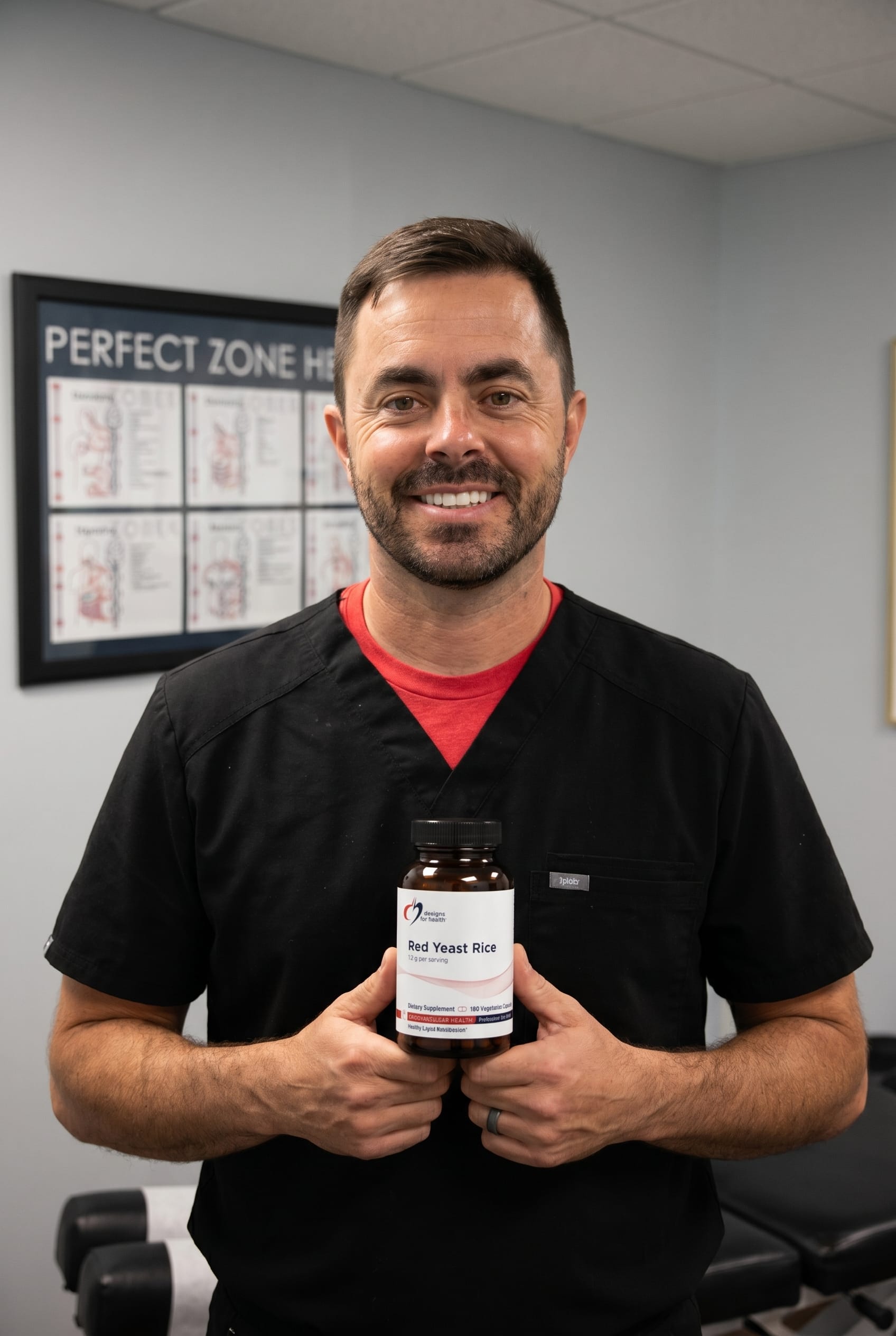
A 64-year-old patient came in frustrated. His doctor wanted him on a statin for an LDL cholesterol of 158. He had tried two different statins over the previous five years and stopped both because of muscle aches that interfered with his golf game and his garden. He was otherwise healthy, his other markers were good, and he was willing to do something natural if it actually worked.
I put him on Red Yeast Rice, two capsules twice a day with food, and added CoQ10. Three months later his LDL was 121. His doctor was happy enough to leave him off the statin and re-check in another six months. His muscles felt fine.
Red yeast rice is the closest thing to a natural statin we have, and for the right patient it is a useful tool. It is not a casual supplement, and it deserves clear thinking about who it fits.
Quick verdict: Red Yeast Rice is a real, evidence-backed cholesterol-lowering supplement that works because it contains a natural-source statin compound.
Order Red Yeast Rice →What red yeast rice actually is
Red yeast rice is exactly what it sounds like: rice that has been fermented with a specific red yeast called Monascus purpureus. It has been a staple in Chinese cooking and traditional medicine for over a thousand years (you have probably eaten it in Peking duck without knowing).
The reason it lowers cholesterol is that the fermentation produces a family of compounds called monacolins, and one of them, monacolin K, is chemically identical to lovastatin, the first prescription statin medication. So red yeast rice is not a different mechanism from statins, it is essentially a low-dose, natural-source statin. That is both its strength and the reason it deserves respect.
DFH's Red Yeast Rice is standardized and tested for content and purity, which is important. The supplement market for red yeast rice has been notoriously inconsistent. Some bottles have almost no monacolin K (and do nothing), and some have been contaminated with a kidney-toxic byproduct called citrinin. DFH tests for both.
What is in DFH Red Yeast Rice
Each capsule contains 600 mg of organic red yeast rice. The product is tested to be citrinin-free, which is the contamination concern with cheaper red yeast rice products. DFH publishes the testing standards in their certificate of analysis.
Two capsules twice a day delivers 2,400 mg of standardized red yeast rice daily, which corresponds to a roughly 10 mg lovastatin-equivalent dose. That is a meaningful but conservative cholesterol-lowering dose, comparable to a starting prescription statin.
Who tends to do well on Red Yeast Rice
The pattern that responds best:
- Borderline-high LDL (130-180) where the conversation is about a statin but the cardiovascular risk is not high enough to demand an aggressive prescription
- Patients who could not tolerate prescription statins because of muscle aches
- Patients who flat-out refuse a prescription statin but are open to a natural option
- Family history of high cholesterol where lifestyle changes alone are not enough
- Mild to moderate LDL elevation in patients otherwise at low cardiovascular risk
- People who want to combine modest pharmacologic lowering with diet and exercise changes
Who should skip it
This is the section that matters most. Red yeast rice is a real medication-strength supplement and the cautions are real:
- Anyone already on a prescription statin (combining them stacks the side effect risk)
- Pregnant or nursing women (statins are pregnancy category X for good reason)
- Anyone with active liver disease or elevated liver enzymes
- Heavy alcohol drinkers (adds to liver burden)
- People on certain antibiotics (erythromycin, clarithromycin), antifungals (ketoconazole), or HIV medications, which interact with statin metabolism
- Anyone on cyclosporine, gemfibrozil, or amiodarone
- Children
- Patients with very high LDL (above 190) or known familial hypercholesterolemia, which usually need stronger treatment than red yeast rice can deliver
- Anyone with high cardiovascular risk who needs the proven mortality benefit of a prescription statin (recent heart attack, diabetes with other risk factors, prior bypass)
Save on Red Yeast Rice with Practitioner Pricing
Below standard retail with practitioner pricing applied to every order. No memberships, no minimums, no hoops to jump through. Just direct-from-DFH shipping with my practitioner discount built into the price.
Get Red Yeast Rice →How to take it (and the CoQ10 pairing)
Two capsules, twice a day, with the largest two meals of the day. Always with food. Total daily dose: 2,400 mg.
Take CoQ10 with it. Statins and red yeast rice both deplete CoQ10, which is what causes the muscle aches in some people. I have patients take 100-200 mg of CoQ10 (or ubiquinol, the active form, at 100 mg) alongside red yeast rice every day. This is not optional in my practice. The CoQ10 pairing is probably the single biggest reason my patients tolerate red yeast rice when they could not tolerate a prescription statin.
Get baseline labs before starting: LDL, HDL, total cholesterol, triglycerides, and liver enzymes (ALT and AST). Re-test in 90 days. If liver enzymes climb (more than 3 times the upper limit of normal), stop and talk to your prescriber. This is rare but it does happen.
What to expect
- Weeks 1 to 4: no felt change. Cholesterol does not "feel" like anything.
- Month 3: LDL typically drops 20-30%. So an LDL of 160 becomes about 115. A 30% drop is meaningful for cardiovascular risk over years.
- Long term: the effect holds as long as you keep taking it. Stop the supplement, the cholesterol drifts back to baseline within a month or two.
Side effects
- Muscle aches in a small minority. Less common than with prescription statins, but possible. Adding CoQ10 prevents most cases.
- Mild GI upset (rare)
- Elevated liver enzymes in a small minority. This is why we re-test labs at 90 days.
- Headache in the first week
- Rarely, a rash
If you develop unexplained muscle pain or weakness, especially with dark urine, stop immediately and call your doctor. Statin-related muscle breakdown is rare but serious, and red yeast rice carries the same low-frequency risk.
What I do not love about it
Red yeast rice is not a vague-feeling supplement. It carries the same biological risks as a low-dose statin, and it deserves the same respect. I do not recommend it for patients who want to "try a natural cholesterol thing" without lab follow-up. If you are not willing to do labs before and after, this is not the right supplement for you.
The other thing: it is a moderate dose. Patients with very high LDL who really need 50% LDL reductions are usually better served by a prescription statin or a combination approach with their cardiologist. Red yeast rice is for the borderline case, not the high-risk case.
Bottom line
Red Yeast Rice is a real, evidence-backed cholesterol-lowering supplement that works because it contains a natural-source statin compound. For borderline LDL elevations in patients who cannot tolerate or refuse a prescription statin, it is the most consistently effective natural option I use. Take it with CoQ10, get labs before and after, and treat it with the same care you would a prescription medication.
Always check with a healthcare provider before starting any cholesterol-lowering supplement, and never combine it with a prescription statin without your prescriber's explicit approval.
← See all cardiovascular health reviews by Dr. Bell
Ready to try Red Yeast Rice?
It is one I trust enough to use with my own patients and order for my family. Through my DFH store you get the authentic, direct-from-manufacturer product with practitioner pricing applied automatically at checkout.
Order Red Yeast Rice →Authentic, direct from Designs for Health · practitioner pricing · no third-party counterfeits
About the Author: Dr. Bell
Dr. Bell is a chiropractor and holistic wellness practitioner at Dr. Bell Health. He writes plain-language reviews of Designs for Health supplements based on years of clinical experience. Read more about Dr. Bell.