Resveratrol Supreme Review by Designs for Health - Dr. Bell
Designs for Health Resveratrol Supreme review by Dr. Bell. Trans-resveratrol from Japanese knotweed with quercetin for healthy aging, cardiovascular and metabolic support, antioxidant defense, and longevity pathways. Dosing, who benefits, side effects.

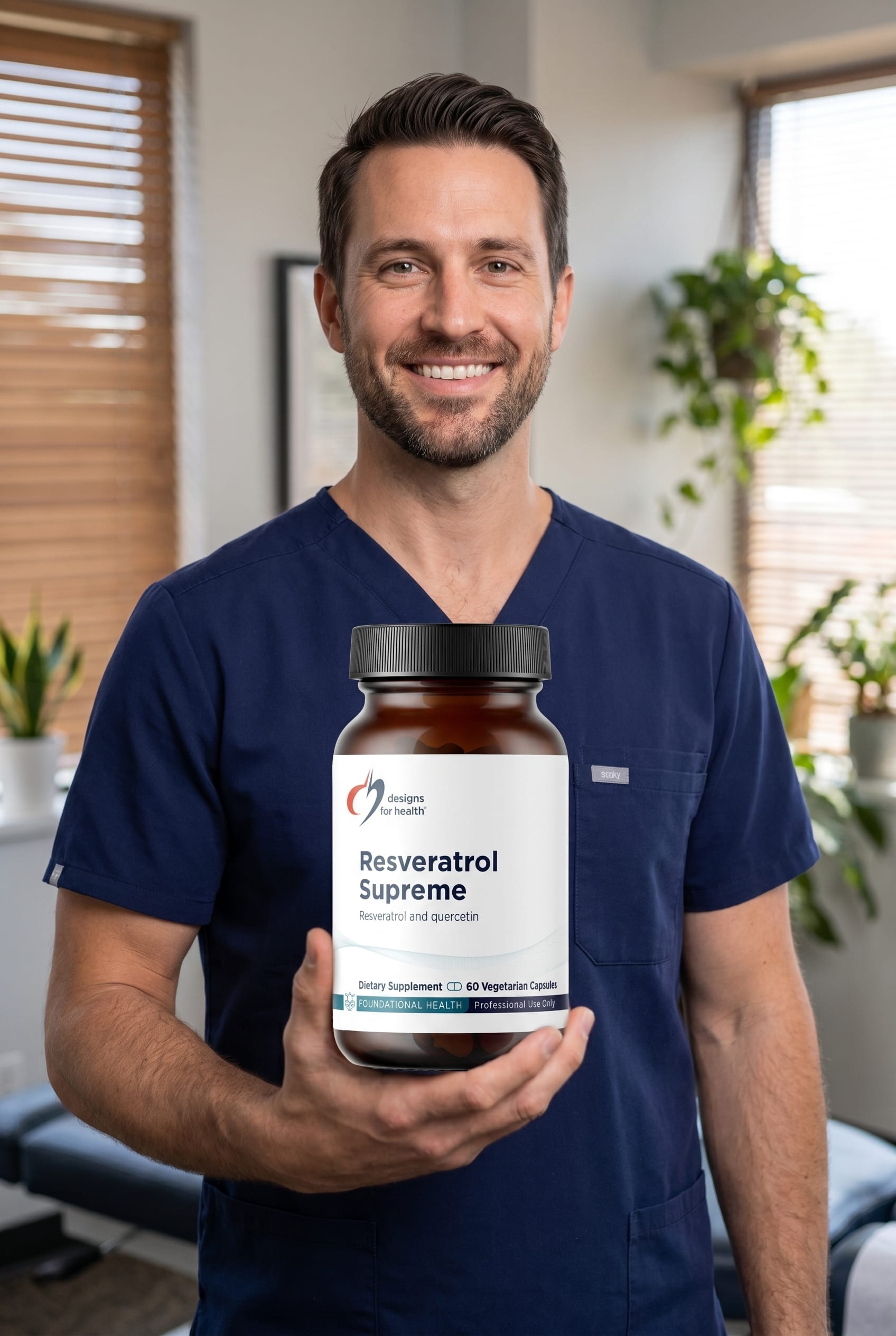
A 62-year-old man came to me interested in "aging well" rather than treating any single disease. His labs were mostly fine, but his blood pressure was creeping up, his LDL cholesterol was borderline, and he had read a stream of headlines about resveratrol, the compound in red wine that gets credit for the so-called French paradox. He wanted to know whether it was hype or whether it was worth taking. Fair question, and the honest answer is somewhere in the middle.
I am careful with anti-aging claims, because the field is full of overpromising. But resveratrol does have real, measurable effects on several pathways that matter as we age, and the dose you would need is far more than you could ever get from wine (you would have to drink dozens of bottles a day, which would create rather more health problems than it solved). I started him on Resveratrol Supreme, one capsule a day with a meal, as one piece of a broader healthy-aging plan that also included exercise, a Mediterranean-style diet, and good sleep.
Healthy aging is not about chasing a single miracle molecule. It is about supporting the handful of biological processes that drive how we age: inflammation, oxidative stress, blood vessel health, and the cellular pathways that govern repair. Resveratrol touches several of these at once, which is why it has earned a place in the longevity conversation, even if the breathless headlines oversell it.
Quick verdict: Resveratrol Supreme is the polyphenol I use as one pillar of a healthy-aging plan, mainly for its cardiovascular, antioxidant, and anti-inflammatory support.
Order Resveratrol Supreme →What this product is actually doing
Resveratrol is a polyphenol, a plant compound that plants make to defend themselves against stress. In humans it acts mainly as a powerful antioxidant and anti-inflammatory, and it appears to activate a family of enzymes called sirtuins that are involved in cellular repair and energy metabolism. Sirtuin activation is one of the mechanisms that gets researchers excited, because it overlaps with the same pathways triggered by calorie restriction, which is the most reliable life-extension intervention known in animals.
On a more practical level, resveratrol supports the lining of your blood vessels (the endothelium), helps blood vessels relax, and has favorable effects on cholesterol oxidation and inflammation. These are the cardiovascular mechanisms behind the French-paradox idea. It also has emerging research interest in blood sugar regulation and brain aging, though those areas are less settled.
The honest framing: resveratrol is not a fountain of youth, and the human longevity data is far from proven. But the cardiovascular, antioxidant, and anti-inflammatory effects are real and reasonably well supported, and those alone make it a sensible part of a healthy-aging strategy for the right person.
What is in Resveratrol Supreme
The formula is built around bioavailable trans-resveratrol, paired with a complementary polyphenol:
- Trans-resveratrol (the active, well-absorbed form, sourced from Japanese knotweed, which is the most concentrated natural source)
- Quercetin (a polyphenol that is often paired with resveratrol; the two work synergistically, and quercetin may help slow resveratrol's breakdown so more stays active)
The trans form is the detail that matters. Resveratrol exists in two configurations, and the trans form is the biologically active, better-absorbed one. A quality product specifies trans-resveratrol rather than just "resveratrol," and uses Japanese knotweed extract standardized to a high percentage. Pairing it with quercetin is a smart formulation choice, because the two polyphenols complement each other and quercetin has its own antioxidant and anti-inflammatory benefits.
Who tends to do well on Resveratrol Supreme
The pattern that responds best:
- Adults focused on healthy aging and prevention rather than a specific diagnosis
- Borderline or elevated cardiovascular risk (blood pressure, cholesterol, inflammation)
- People with a strong family history of heart disease wanting added vascular support
- Those with metabolic syndrome or insulin resistance (emerging blood sugar research)
- People interested in the sirtuin and longevity-pathway research
- Anyone building an antioxidant and anti-inflammatory baseline alongside a Mediterranean diet
- People who want the benefits attributed to red wine without the alcohol
Who should skip it
- Pregnant or breastfeeding women
- Anyone on a blood thinner or antiplatelet drug (resveratrol and quercetin can both thin the blood; talk to your prescriber)
- People with hormone-sensitive conditions (resveratrol has mild estrogen-like activity; discuss with your provider if you have a history of hormone-sensitive cancer)
- Those scheduled for surgery within two weeks (stop beforehand because of the blood-thinning effect)
- People on medications metabolized by the liver (quercetin and resveratrol can affect drug levels; check with a pharmacist)
Save on Resveratrol Supreme with Practitioner Pricing
Below standard retail with practitioner pricing applied to every order. No memberships, no minimums, no hoops to jump through. Just direct-from-DFH shipping with my practitioner discount built into the price.
Get Resveratrol Supreme →How to take it
The typical dose is one capsule a day, taken with a meal that contains some fat, since resveratrol is fat-soluble and absorbs better that way.
- Take it with food, ideally a meal with some healthy fat (olive oil, nuts, avocado, eggs).
- Consistency matters more than timing. Resveratrol works through long-term, cumulative effects on inflammation and vascular health, not an acute hit.
- It pairs naturally with the rest of a healthy-aging routine: a Mediterranean-style diet, regular exercise, good sleep, and stress management. The supplement amplifies those; it does not replace them.
- Think in terms of months and years, not days. This is a prevention and maintenance compound.
What to expect
- You will not feel a dramatic acute effect; this is not a stimulant or a mood lifter
- Weeks to months: the benefits are measured on labs and over time (inflammatory markers, cholesterol oxidation, blood pressure trends) rather than felt
- Long term: the rationale is supporting cardiovascular and cellular health to age more resiliently
- Best viewed as one supporting pillar of a broader healthy-aging plan
- If you stop: no withdrawal; you simply lose the ongoing antioxidant and vascular support
Side effects
- Generally very well tolerated at normal doses
- Mild digestive upset (nausea, loose stool) in some people, usually at higher doses
- Blood-thinning effect, which matters if combined with anticoagulants or before surgery
- Possible interactions with drugs processed by the liver's enzyme pathways
- Mild estrogen-like activity, relevant for hormone-sensitive conditions
What I do not love about it
The biggest issue is the gap between the hype and the proof. Resveratrol has been marketed as an anti-aging miracle on the strength of animal studies and mechanism, but the human longevity evidence is still thin. I am comfortable recommending it for its cardiovascular, antioxidant, and anti-inflammatory effects, which are reasonably supported, but I am honest with patients that "it will make you live longer" is not something the human data can promise yet.
Resveratrol also has modest bioavailability. The body absorbs it and clears it fairly quickly, which is part of why pairing it with quercetin (which helps slow that clearance) is a sensible formulation. Even so, you should not expect a single compound taken once a day to transform your health on its own.
And the blood-thinning and drug-interaction profile means this is not a no-questions-asked supplement for everyone. Anyone on anticoagulants, with a hormone-sensitive history, or on multiple medications should clear it with their provider first. It is gentle, but it is not inert.
For background, see the PMC review on resveratrol and cardiovascular health, the PMC review on resveratrol, sirtuins, and aging, and the NIH NCCIH overview of antioxidants.
Bottom line
Resveratrol Supreme is the polyphenol I use as one pillar of a healthy-aging plan, mainly for its cardiovascular, antioxidant, and anti-inflammatory support. The bioavailable trans-resveratrol from Japanese knotweed, paired with quercetin, is a sensible formulation. Take one capsule a day with a fatty meal, think in terms of years, and treat it as a complement to a Mediterranean diet, exercise, and good sleep rather than a magic longevity pill.
Always check with a healthcare provider before starting any new supplement, especially if you take a blood thinner, have a hormone-sensitive condition, are on multiple medications, or have surgery scheduled.
← See all healthy aging reviews by Dr. Bell
Ready to try Resveratrol Supreme?
It is one I trust enough to use with my own patients and order for my family. Through my DFH store you get the authentic, direct-from-manufacturer product with practitioner pricing applied automatically at checkout.
Order Resveratrol Supreme →Authentic, direct from Designs for Health · practitioner pricing · no third-party counterfeits
About the Author: Dr. Bell
Dr. Bell is a chiropractor and holistic wellness practitioner at Dr. Bell Health. He writes plain-language reviews of Designs for Health supplements based on years of clinical experience. Read more about Dr. Bell.