DHEA 25mg Review by Designs for Health - Dr. Bell
Designs for Health DHEA 25mg review by Dr. Bell. Hormone support for men and women over 40. Benefits, dosing, side effects, who it helps and who should skip.

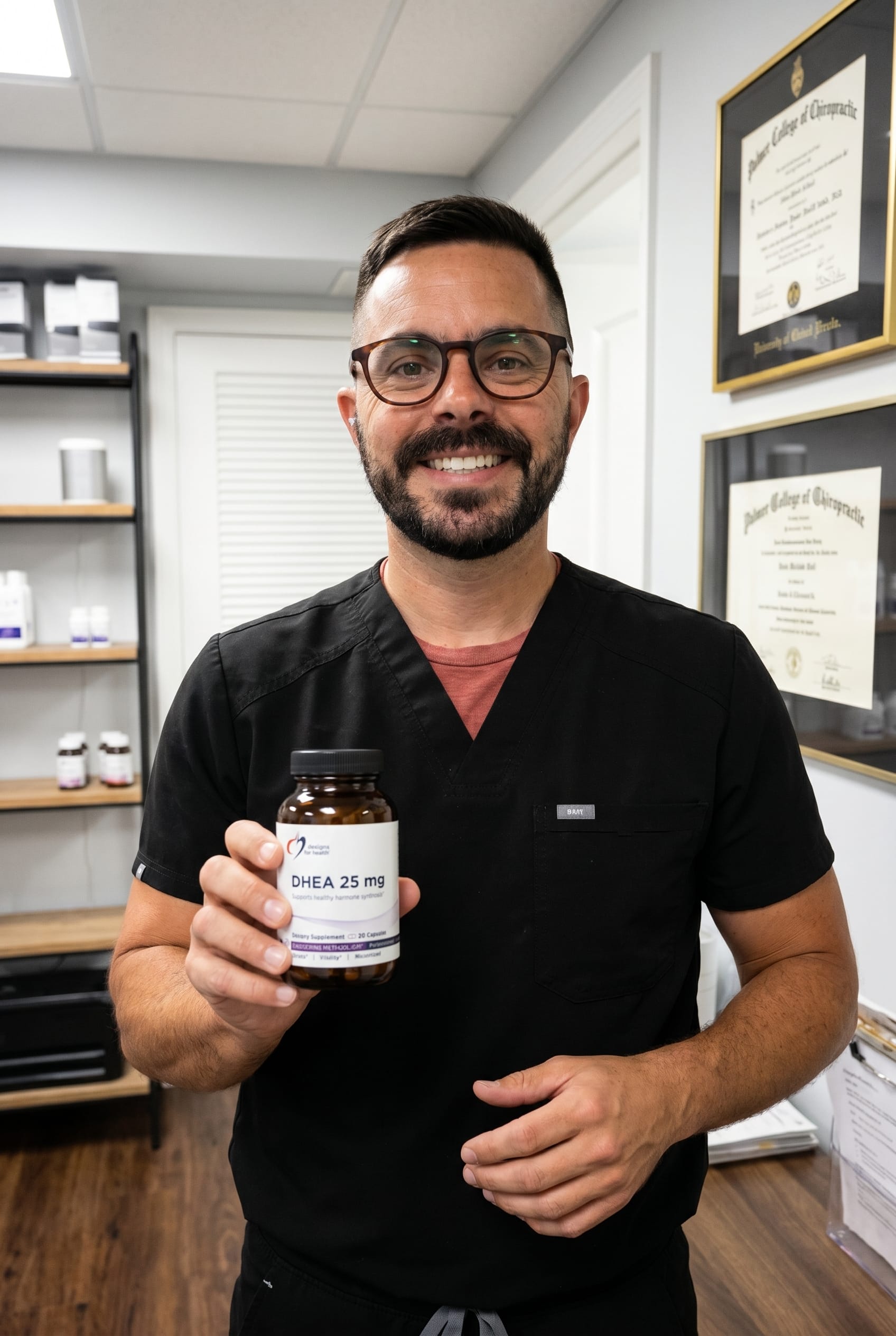
A man in his early 50s came in last fall feeling flat. He was sleeping fine, eating well, exercising three times a week. Bloodwork was normal. His testosterone was on the low end of the normal range, but not low enough that anyone wanted to put him on testosterone replacement. He just felt blunted. Less drive, less recovery from workouts, less of the spark he used to have.
I checked his DHEA-S level. It was at the bottom of the reference range for his age. I started him on DHEA 25mg, one capsule every morning. Six weeks later he came back saying the fog had lifted and he felt like himself again.
DHEA is one of those supplements that does very little for some people and a lot for the right person. The trick is knowing which group you are in.
Quick verdict: DHEA 25mg is a useful supplement for adults over 40 with documented low DHEA-S, especially when low energy, low libido, slow recovery, or low mood are part of the picture.
Order DHEA 25mg →What DHEA actually does
DHEA is a hormone your adrenal glands make. The body uses it as a building block to make testosterone, estrogen, and other downstream hormones. Levels peak in your mid-20s and drop steadily after that. By age 70, most people are making about a quarter of what they made at 25.
That decline is part of why energy, libido, mood, and recovery shift with age. Supplementing DHEA does not stop the clock, but it gives the body more of the raw material it needs to produce its own hormones again.
Designs for Health DHEA 25mg is a single-ingredient capsule with 25 mg of micronized DHEA. The micronized form absorbs better than older powder formulations. Each bottle has 60 capsules.
Who tends to do well on DHEA 25mg
The classic DHEA patient looks like this:
- Adult over 40 with low DHEA-S on bloodwork
- Feeling flat, low drive, blunted mood despite normal sleep and labs
- Slow recovery from exercise
- Low libido
- Coming out of a long stress period (chronic stress depletes DHEA)
- Women in perimenopause or early postmenopause with low energy and dry skin
- Men with borderline low testosterone who do not want full hormone replacement yet
It is also useful for people on long-term steroid medications, which suppress adrenal output, but only under provider guidance.
Who should skip it
This is a hormone supplement, so the cautions are real:
- Anyone with a history of hormone-sensitive cancer (breast, prostate, ovarian, endometrial)
- Pregnant or nursing women
- Anyone under 30 with normal DHEA-S levels
- Polycystic ovary syndrome (DHEA can be elevated already)
- Active liver disease
- People on hormone replacement therapy without coordinating with their prescriber
Get your DHEA-S level tested before starting. If it is in the upper half of the reference range for your age, you do not need it. If it is in the lower third, supplementation makes sense.
Get DHEA 25mg at Practitioner Pricing
Direct from Designs for Health, below standard retail. Practitioner pricing is applied automatically at checkout. Every bottle is authentic, properly stored, and ships fast from the DFH warehouse.
Order DHEA 25mg →How to take it
One capsule (25 mg) in the morning with food. Morning matches your body's natural cortisol and DHEA rhythm, and it avoids any chance of activating energy late in the day disrupting sleep.
For women, 25 mg is often the right dose. Some women do better on 10 mg or even 5 mg, but DFH does not make those lower-dose products. If 25 mg is too activating, opening the capsule and taking half is reasonable for short stints.
For men, 25 mg is a starting dose. Some men eventually move to 50 mg under provider guidance, but I do not start anyone there.
Re-test DHEA-S at 8 to 12 weeks. The goal is the upper half of the age-adjusted reference range, not the top.
What to expect
Most people notice changes between week 3 and week 6. Energy and mood shift first. Libido follows. Recovery from exercise tends to improve at the 6 to 8 week mark.
If you feel nothing by week 8 and your DHEA-S has not moved, the issue is probably not DHEA. Stop and look elsewhere. Adrenal fatigue, thyroid, sleep quality, blood sugar, or actual sex hormone deficiency are the usual suspects.
Side effects
The most common side effects come from DHEA being converted into androgens (testosterone family hormones):
- Acne, especially on the chest and back
- Oily skin or hair
- Mild irritability or aggression at higher doses
- For women: hair growth on the face, voice changes (rare at 25 mg)
- For men: a small bump in estrogen as DHEA converts both directions
If acne shows up, the dose is probably too high for you. Drop to a half capsule or stop.
What I do not love about it
This is not a "try it and see" supplement. You really do want a baseline DHEA-S level before you start, and a follow-up at 12 weeks. People who take it without testing often end up either over-supplementing (more is not better with hormones) or wasting money on a supplement they did not need.
The other limit is that DHEA is one input. If your low energy is really about poor sleep, low thyroid, or sustained stress, DHEA on its own will not fix it. It is most useful as part of a bigger plan.
Bottom line
DHEA 25mg is a useful supplement for adults over 40 with documented low DHEA-S, especially when low energy, low libido, slow recovery, or low mood are part of the picture. Test before you start, take it in the morning, and re-test at 12 weeks.
Always check with a healthcare provider before starting any hormone-related supplement, especially if you have a personal or family history of hormone-sensitive cancer or take prescription hormones.
← See all hormone health reviews by Dr. Bell
Ready to try DHEA 25mg?
It is one I trust enough to use with my own patients and order for my family. Through my DFH store you get the authentic, direct-from-manufacturer product with practitioner pricing applied automatically at checkout.
Order DHEA 25mg →Authentic, direct from Designs for Health · practitioner pricing · no third-party counterfeits
About the Author: Dr. Bell
Dr. Bell is a chiropractor and holistic wellness practitioner at Dr. Bell Health. He writes plain-language reviews of Designs for Health supplements based on years of clinical experience. Read more about Dr. Bell.