GI Microb-X Review by Designs for Health - Dr. Bell
Designs for Health GI Microb-X review by Dr. Bell. Herbal antimicrobial blend with berberine, tribulus, sweet wormwood, black walnut, and oregano for SIBO, dysbiosis, parasites, and gut microbial balance. Dosing, who benefits, side effects.

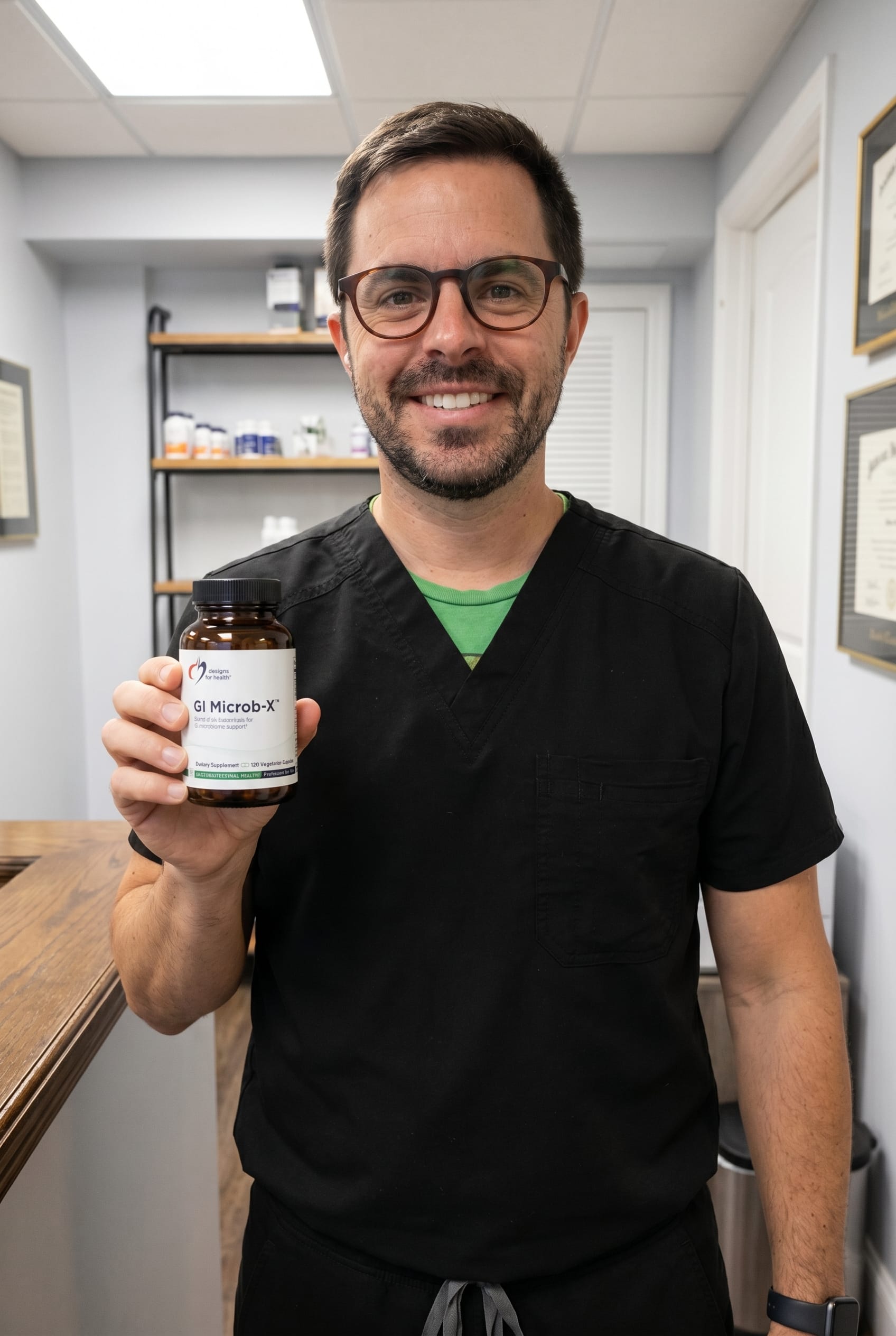
A 35-year-old patient came to me with two years of bloating that nobody could explain. She had been worked up by two gastroenterologists, had a negative celiac panel, a normal colonoscopy, and a stool test that suggested a mild dysbiosis. Her abdomen distended visibly within an hour of eating almost anything. Her clothes did not fit by the end of the day. A breath test from a functional medicine practitioner had come back positive for SIBO (small intestine bacterial overgrowth).
I started her on GI Microb-X, two capsules twice a day with meals, for four weeks. By week two her after-meal distention was clearly less. By week four her bloating had resolved and her clothes fit through the evening for the first time in two years. We then transitioned her to a maintenance protocol with motility support and gut-lining repair, and she has stayed well.
SIBO and gut dysbiosis are common, often misdiagnosed, and respond well to targeted antimicrobial herbs. Prescription antibiotics (rifaximin) work but are expensive and not always covered. Herbal antimicrobial protocols have been studied head-to-head against rifaximin and shown comparable success rates in published trials. GI Microb-X is one of the formulations I use most often in my office because it covers a broad spectrum of microbes without being overly aggressive.
Quick verdict: GI Microb-X is the broad-spectrum herbal antimicrobial I reach for when patients have confirmed SIBO, dysbiosis on stool testing, suspected yeast overgrowth, or persistent IBS-pattern bloating that has not responded to diet alone.
Order GI Microb-X →What this product is actually doing
Your small intestine is supposed to have low bacterial counts. The bulk of your gut microbiome lives in the colon, where the bacteria help ferment fiber, produce vitamins, and shape the immune system. When bacteria migrate up into the small intestine and start fermenting food there, you get the classic SIBO picture: bloating shortly after eating, gas, irregular bowels, fatigue, food sensitivities, and often nutrient deficiencies.
SIBO can be driven by many things: low stomach acid (often from chronic PPI use), a slow migrating motor complex (the wave that sweeps the small intestine clean between meals), post-infection nerve damage to the gut (post-infectious IBS), abdominal surgery, opioid use, hypothyroidism, or chronic stress.
Herbal antimicrobials work by directly killing or suppressing the overgrown bacteria. Different herbs target different microbes. A broad-spectrum blend like GI Microb-X catches more of them in one product than a single-herb approach. The herbs in this blend (berberine, tribulus, sweet wormwood, black walnut, bearberry, oregano, and others) have each been studied for antimicrobial activity in lab and clinical settings.
What is in GI Microb-X
Each capsule contains a proprietary blend of:
- Berberine HCl (broad-spectrum antimicrobial, also lowers blood sugar)
- Tribulus aerial parts extract
- Sweet wormwood (Artemisia annua) (active against parasites and some bacteria)
- Grapefruit seed extract
- Barberry root extract (another berberine-containing herb)
- Bearberry (uva ursi) leaf extract
- Black walnut hull extract (active against parasites and yeast)
- Oregano leaf extract (antifungal and antibacterial)
The daily clinical dose is four capsules a day, usually two with breakfast and two with dinner. The blend covers a wide microbial range: gram-positive and gram-negative bacteria, yeast (Candida), and some parasites.
The capsules are vegetarian. The herbs are properly extracted and standardized where appropriate (the berberine especially).
Who tends to do well on GI Microb-X
The pattern that responds best:
- SIBO (positive breath test for hydrogen, methane, or hydrogen sulfide overgrowth)
- Dysbiosis on a comprehensive stool test
- Bloating shortly after meals (especially upper abdominal bloating)
- IBS with bloating, irregular stool, food sensitivities
- Suspected gut yeast overgrowth (Candida overgrowth)
- Parasitic infections (after appropriate testing)
- Bad breath that does not improve with dental work (sometimes from gut bacteria)
- Recurrent bacterial vaginosis or yeast infections with a clear gut component
- Skin conditions (eczema, rosacea) with a gut microbial component
- Brain fog and fatigue with a clear gut component
- Post-antibiotic dysbiosis (sometimes; usually paired with probiotic and gut-lining repair)
- Patients who have failed lifestyle and dietary changes alone
Who should skip it
- Pregnant or nursing women (multiple herbs not appropriate in pregnancy; berberine specifically should not be used)
- Newborns and very young children (most herbs not well-studied; berberine can cause jaundice in newborns)
- Patients on cyclosporine, tacrolimus, or certain transplant medications (herbs can affect drug levels)
- People with severe liver disease
- Patients on metformin who already have stable blood sugar (berberine can lower it further)
- People with severe kidney disease (uva ursi can be irritating to the kidneys)
- Patients on multiple psychiatric medications metabolized by CYP enzymes (berberine inhibits some of these)
- Anyone with active inflammatory bowel disease in flare (talk to your gastroenterologist first)
Get GI Microb-X at Practitioner Pricing
Direct from Designs for Health, below standard retail. Practitioner pricing is applied automatically at checkout. Every bottle is authentic, properly stored, and ships fast from the DFH warehouse.
Order GI Microb-X →How to take it
For active SIBO or dysbiosis: two capsules twice a day with meals (four capsules total) for 4 to 6 weeks. Some protocols use GI Microb-X in rotation with a second antimicrobial product (like FC-Cidal or Olive Leaf Extract) to hit microbes from different angles.
For maintenance after an initial treatment: one capsule once or twice a day for another 2 to 4 weeks, then off. Most patients should not stay on antimicrobial herbs long-term.
For yeast overgrowth specifically: two capsules twice a day for 4 weeks, often paired with a low-sugar diet for the same period.
Always pair antimicrobial treatment with motility support (prokinetic agents like ginger or prescription motilium) and gut-lining repair (GI Revive Powder or similar). The antimicrobial alone kills the overgrowth but does not prevent it from coming back. Without addressing motility, SIBO returns in many patients within months.
Take with food to reduce stomach irritation. The bitter herbs in the blend stimulate digestive juices, which can actually help digestion when taken with meals.
What to expect
- Days 1 to 7: some patients feel worse before they feel better. This is the die-off (Herxheimer) reaction: bacteria release endotoxins as they die, which can cause fatigue, headache, brain fog, and worsened bloating for a few days. Drink extra water and reduce the dose if severe.
- Weeks 2 to 4: bloating decreases. Bowel movements often regularize. Energy improves.
- Weeks 4 to 6: full effect in responders. Repeat breath test (if SIBO) or stool test often shows clearance.
- After treatment: many patients need 2 to 4 weeks of gut-lining repair (GI Revive Powder) and a prokinetic to prevent recurrence.
- If treatment did not fully resolve symptoms: a second round with a different antimicrobial herb, prescription rifaximin, or further functional medicine workup is often needed.
Side effects
- Die-off (Herxheimer) reaction in the first week: headache, fatigue, brain fog, transient bloating. Reduce dose if severe; add an activated charcoal binder if needed.
- Loose stool or mild diarrhea
- Constipation in some patients (especially methane-positive SIBO)
- Stomach upset, take with food
- Mild blood sugar drop from berberine
- Mild liver enzyme elevation in rare cases (more common at very high doses or in patients with pre-existing liver disease)
- Drug interactions: many. Berberine specifically interacts with metformin, cyclosporine, and various psychiatric and cardiac medications.
- Allergic reaction, including cross-reactivity in patients with severe ragweed allergy (artemisia family)
What I do not love about it
The protocol takes commitment. Four capsules a day for 4 to 6 weeks, paired with diet and motility support, is more work than a one-and-done antibiotic. Patients who want a fast fix sometimes do better with prescription rifaximin (though it costs more out of pocket if insurance does not cover it).
The herbal blend is broad-spectrum, which is usually a feature but occasionally a problem. It does not distinguish between "good" and "bad" bacteria as much as we would like. Some patients lose useful gut bacteria along with the overgrowth, which is why pairing with probiotic and prebiotic after treatment matters.
And: SIBO comes back. The herbs treat the overgrowth, but they do not fix what allowed the overgrowth in the first place (slow motility, low stomach acid, ileocecal valve dysfunction, post-infectious nerve damage). Long-term success depends on identifying and addressing the upstream cause.
For background, see the PMC study comparing herbal protocols to rifaximin for SIBO and the PMC review on berberine and gut microbiome.
Bottom line
GI Microb-X is the broad-spectrum herbal antimicrobial I reach for when patients have confirmed SIBO, dysbiosis on stool testing, suspected yeast overgrowth, or persistent IBS-pattern bloating that has not responded to diet alone. The blend of berberine, sweet wormwood, oregano, black walnut, and other herbs covers bacteria, yeast, and some parasites in one product. Two capsules twice a day with meals for 4 to 6 weeks, paired with motility support and gut-lining repair.
Always check with a healthcare provider before starting any new supplement, especially if you are pregnant, take prescription medications, or have liver, kidney, or transplant-related conditions.
← See all gut health reviews by Dr. Bell
Ready to try GI Microb-X?
It is one I trust enough to use with my own patients and order for my family. Through my DFH store you get the authentic, direct-from-manufacturer product with practitioner pricing applied automatically at checkout.
Order GI Microb-X →Authentic, direct from Designs for Health · practitioner pricing · no third-party counterfeits
About the Author: Dr. Bell
Dr. Bell is a chiropractor and holistic wellness practitioner at Dr. Bell Health. He writes plain-language reviews of Designs for Health supplements based on years of clinical experience. Read more about Dr. Bell.