Whole Body Collagen Review by Designs for Health - Dr. Bell
Designs for Health Whole Body Collagen review by Dr. Bell. Three-peptide blend for joints, skin, hair, and bone. Benefits, dosing, who it helps.

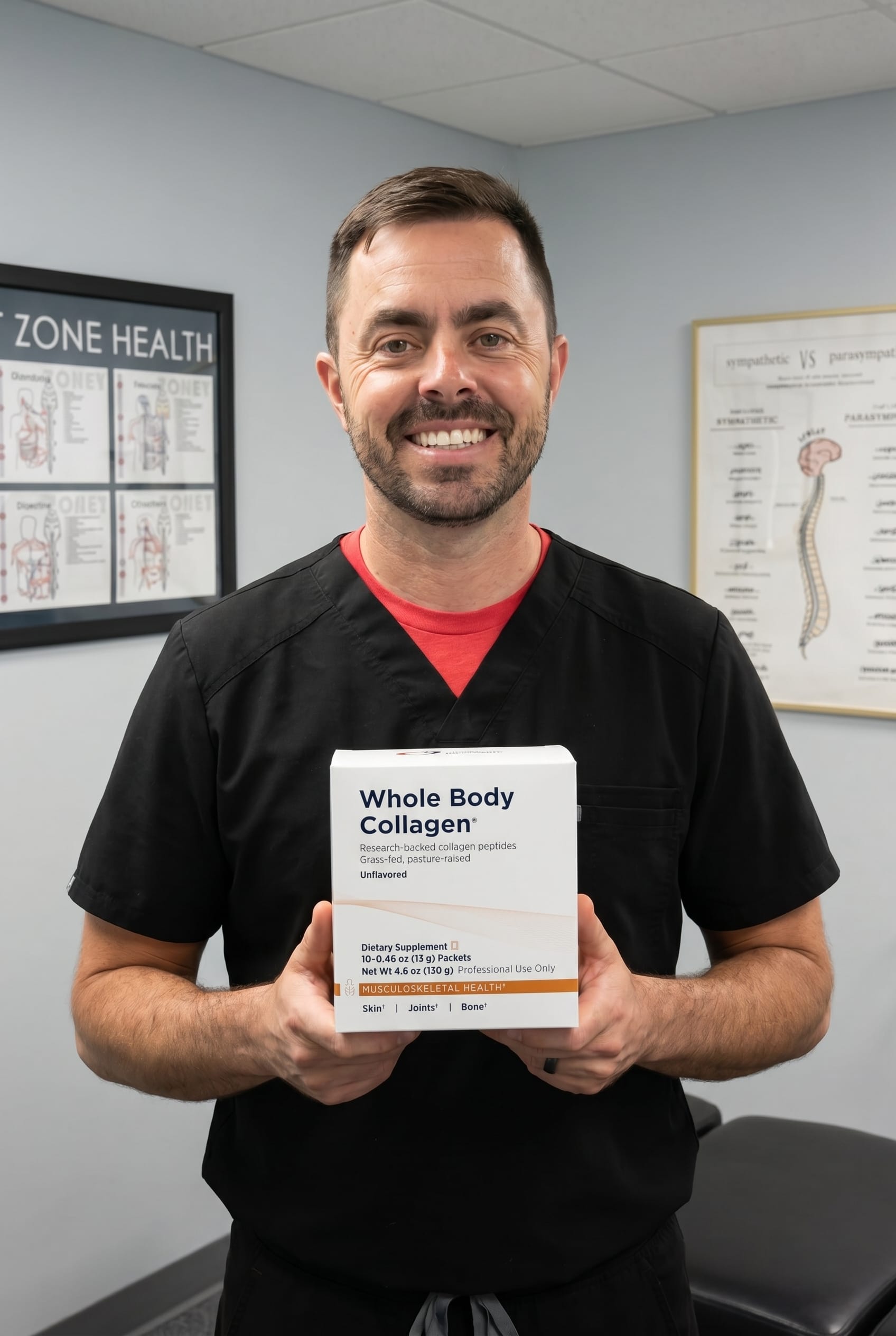
I had a patient in her late 50s come in for knee pain. She was active. Walked four miles a day, did light weights, ate well. Her knees had started barking at her on hills and stairs. Imaging showed early cartilage thinning, nothing dramatic. She was trying to avoid the path of stronger and stronger painkillers.
I started her on Whole Body Collagen, one scoop in her morning coffee. By month three, the stair pain was gone. By month six, she was hiking again. Her hairdresser also mentioned her hair looked thicker. That second part was a bonus.
Collagen is one of the few supplements with solid clinical research behind it for joints and skin. Whole Body Collagen is the version I send patients to, and the clue is in the name.
Quick verdict: Whole Body Collagen is the collagen I recommend most often because the three-peptide blend gives you bone, skin, and muscle support in one scoop instead of stacking three separate products.
Order Whole Body Collagen →What makes Whole Body Collagen different
Most collagen powders on the market are a single type of collagen, usually from one source (cow or fish). Whole Body Collagen blends three different collagen peptides:
- FORTIBONE, a bone-targeted collagen peptide with research showing it improves bone mineral density
- VERISOL, a skin-targeted collagen peptide with studies on wrinkle depth, skin elasticity, and hair thickness
- BODYBALANCE, a muscle-targeted peptide with research on lean muscle mass in older adults
Each peptide has been studied for the specific tissue it targets. Lumping them together gives you bone, skin, joint, and muscle support in one scoop. The total dose is 10 grams of collagen peptides plus a small amount of vitamin C, which the body needs to assemble collagen.
The powder is unflavored and dissolves cleanly in coffee, smoothies, or water. No fishy taste, no chalky residue.
Who tends to do well on Whole Body Collagen
The patients who get the most from Whole Body Collagen:
- Joint pain or early osteoarthritis
- Adults over 50 worried about bone density
- Postmenopausal women, who lose bone fast in the first decade after menopause
- Skin showing more lines and less elasticity
- Hair thinning, especially in women over 40
- Athletes recovering from soft-tissue injuries
- People on a low-protein diet (collagen counts as a protein source)
- Anyone wanting to support muscle as they age (sarcopenia prevention)
It also pairs well with Inflammatone for joint patients who need both anti-inflammatory support and the structural building blocks.
Who should skip it
Whole Body Collagen is well-tolerated by almost everyone, but a few notes:
- If you are vegan or vegetarian, this is not for you. All collagen is from animal sources.
- People with kidney disease should ask their nephrologist before adding any concentrated protein source.
- People with histamine intolerance occasionally react to collagen powders. Start with a half scoop.
- Pregnancy is generally fine, but check with your OB.
One thing collagen will not do: replace a strength-training program. The research on bone density and muscle mass shows the best results when collagen is combined with regular resistance work. The supplement helps. It does not work alone.
Save on Whole Body Collagen with Practitioner Pricing
Below standard retail with practitioner pricing applied to every order. No memberships, no minimums, no hoops to jump through. Just direct-from-DFH shipping with my practitioner discount built into the price.
Get Whole Body Collagen →How to take it
One scoop (about 11 grams) once a day, mixed into anything you can stir it into. Coffee is most patients' favorite. It also works in smoothies, oatmeal, yogurt, or just water. The powder is unflavored and does not change the taste of what you mix it with.
Timing is flexible. Some research suggests taking it about an hour before exercise gives a small edge for joint and tendon repair. For most people, the morning routine is what they will actually stick with, so that is what I recommend.
For severe joint issues or bone density concerns, two scoops a day is reasonable for the first three months, then back to one for maintenance.
What to expect
Joint pain: 6 to 12 weeks. Most people notice the difference walking up stairs first.
Skin: 8 to 12 weeks. The studies on VERISOL show measurable changes in wrinkle depth and skin elasticity at 8 weeks, with continued improvement at 6 months.
Hair and nails: about 12 weeks. Nails get stronger first. Hair thickening shows up later because hair cycles are slow.
Bone density: 12 months. The FORTIBONE study ran a full year before measuring bone mineral density changes. This one is a long game.
Muscle: 8 to 12 weeks, but only if combined with strength training.
Side effects
Whole Body Collagen is one of the most well-tolerated supplements I recommend. The few issues:
- Mild bloating or fullness when first starting (usually clears in a week)
- Histamine reactions in a small group of patients
- Loose stool at higher doses (rare)
What I do not love about it
It is bigger than a typical pill bottle and it is a powder, which adds a step to the morning routine. People who travel a lot find it less convenient than capsules. There is no capsule version of this product.
Cost per scoop is reasonable, but if you take two scoops a day, a tub does not last long. For most people, one scoop a day is enough and the bottle lasts about a month.
Bottom line
Whole Body Collagen is the collagen I recommend most often because the three-peptide blend gives you bone, skin, and muscle support in one scoop instead of stacking three separate products. Joint pain, skin changes, hair thinning, and bone density concerns all respond to this product, but the timeline is in months, not days. Combine it with strength training for the best results.
Always check with a healthcare provider before starting any new supplement, especially if you have kidney disease or take prescription medication.
← See all bone, joint and muscle reviews by Dr. Bell
Ready to try Whole Body Collagen?
It is one I trust enough to use with my own patients and order for my family. Through my DFH store you get the authentic, direct-from-manufacturer product with practitioner pricing applied automatically at checkout.
Order Whole Body Collagen →Authentic, direct from Designs for Health · practitioner pricing · no third-party counterfeits
About the Author: Dr. Bell
Dr. Bell is a chiropractor and holistic wellness practitioner at Dr. Bell Health. He writes plain-language reviews of Designs for Health supplements based on years of clinical experience. Read more about Dr. Bell.